Discussion
of Issues
Issue 1:
Should the Commission approve the 2026 Territorial
Agreement between DEF and TECO in Hillsborough, Pasco, Pinellas, and Polk
Counties, dated January 7, 2026?
Recommendation:
Yes, the Commission should approve the 2026
Territorial Agreement between DEF and TECO in Hillsborough, Pasco, Pinellas,
and Polk Counties, as consistent with the Standards for Approval set forth in
Rule 25-6.0440(2), F.A.C. The 2026 Territorial Agreement, if approved, amends
the respective boundary lines between the Utilities, thereby eliminating
extra-territorial connections. The agreement would also facilitate the joint
petitioners’ efforts to avoid uneconomic duplication of service facilities, wasteful
expenditures, and hazardous conditions. Also, the terms of the agreement
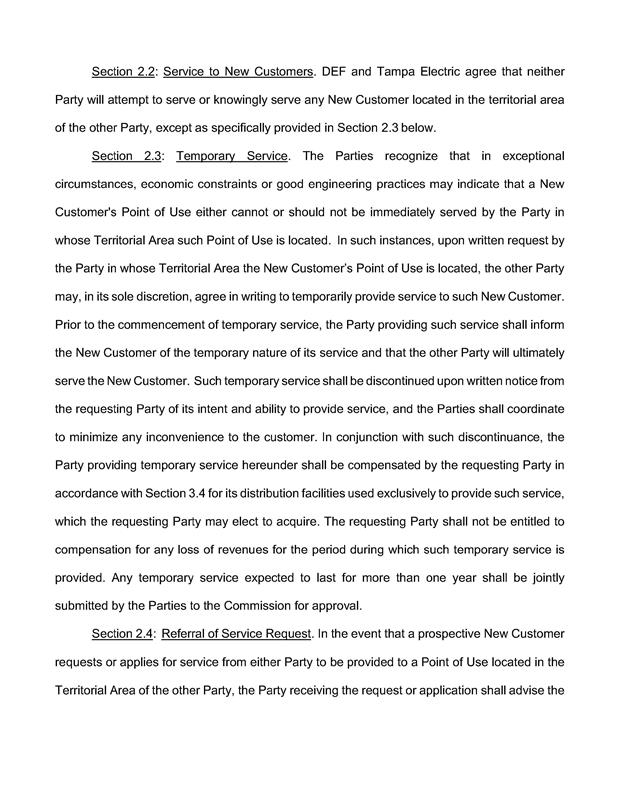
require the Utilities to seek Commission approval of any temporary service,
including inadvertent service, expected to last more than one year. The
Utilities are also encouraged to communicate with Commission staff in a timely
fashion when inadvertent service is discovered. (Prewett)
Staff Analysis:
Pursuant to
Section 366.04(2)(d), F.S., and Rule 25-6.0440(2), (F.A.C.), the Commission has
jurisdiction to approve territorial agreements between and among rural electric
cooperatives, municipal electric utilities, and investor-owned electric
utilities. Unless the Commission determines that the agreement will cause a
detriment to the public interest, the 2026 Territorial Agreement should be
approved.
Rule
25-6.0440(2), F.A.C., addresses the standards the Commission should consider
for approving territorial agreements for electric utilities. The rule states:
(2) Standards for Approval. In approving territorial
agreements, the Commission may consider:
(a) The reasonableness of the purchase price of any
facilities being transferred;
(b) The reasonable likelihood that the agreement, in and of
itself, will not cause a decrease in the reliability of electrical service to
the existing or future ratepayers of any utility party to the agreement;
(c) The reasonable likelihood that the agreement will
eliminate existing or potential uneconomic duplication of facilities; and
(d) Any other factor the Commission finds relevant in
reaching a determination that the territorial agreement is in the public
interest.
Proposed 2026 Territorial Agreement
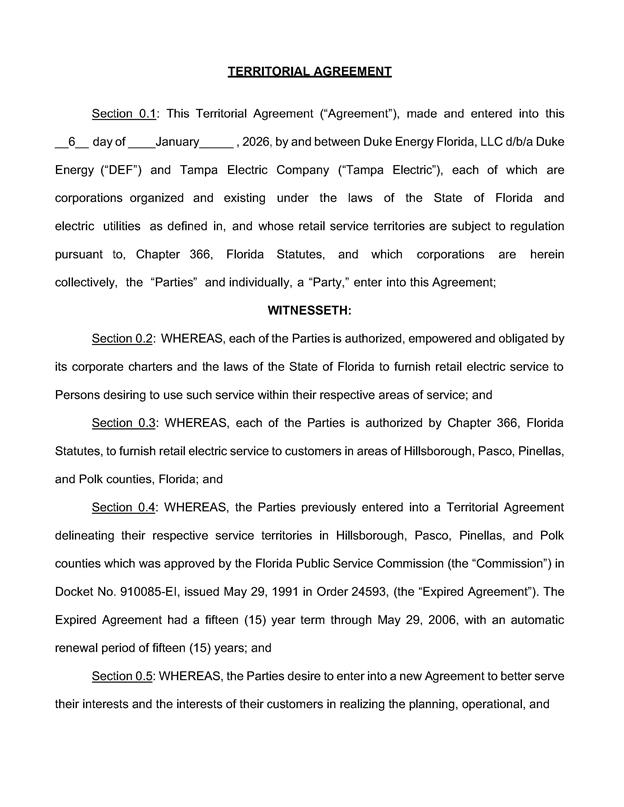
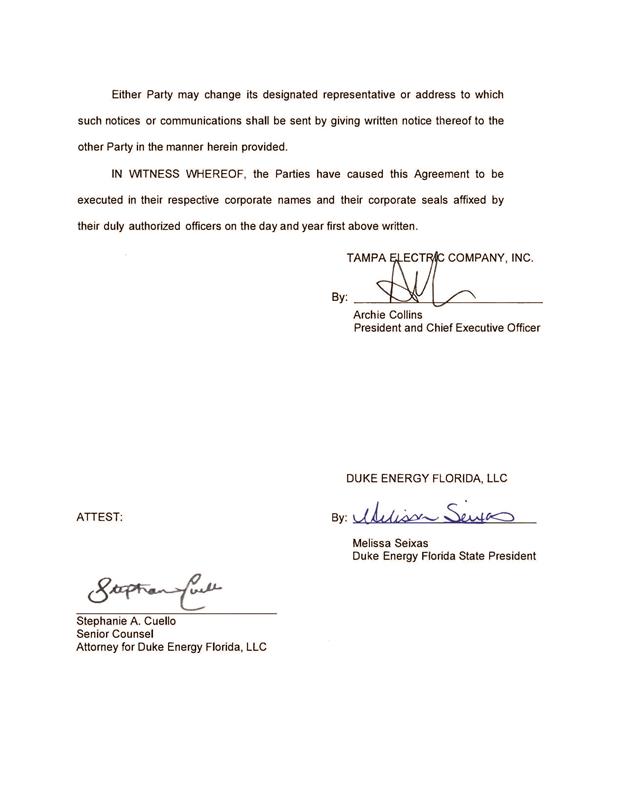
DEF and TECO executed the 2026 Territorial Agreement
addressing common boundaries over a four-county area on January 7, 2026, to
replace and supersede the existing territorial agreement from 1991. The joint
petitioners assert that the 2026 Territorial Agreement will accomplish three
main objectives:
(1)
Reduce or eliminate dangerous and uneconomic
conditions;
(2)
Transfer certain customers over a future 12 months to
correct (reverse) inadvertent service connection errors that have taken place;
and
(3)
Make minor boundary changes to allow for sound
engineering and operational decisions and to eliminate extra-territorial
connections.
Collectively, these objectives are expected to aid the
Utilities in eliminating circumstances that give rise to the uneconomic
duplication of service facilities and hazardous conditions, such as overlapping
wires and facilities that could endanger utility linemen and the public at
large.
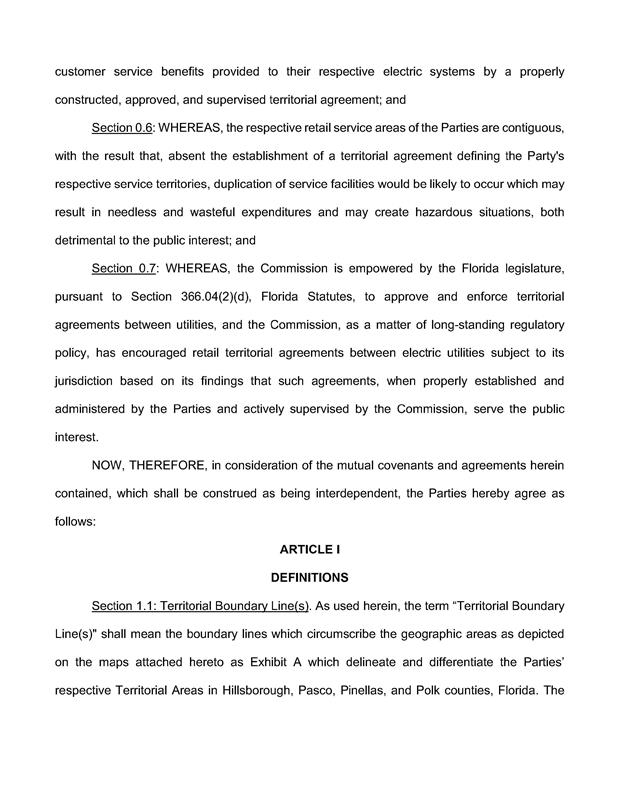
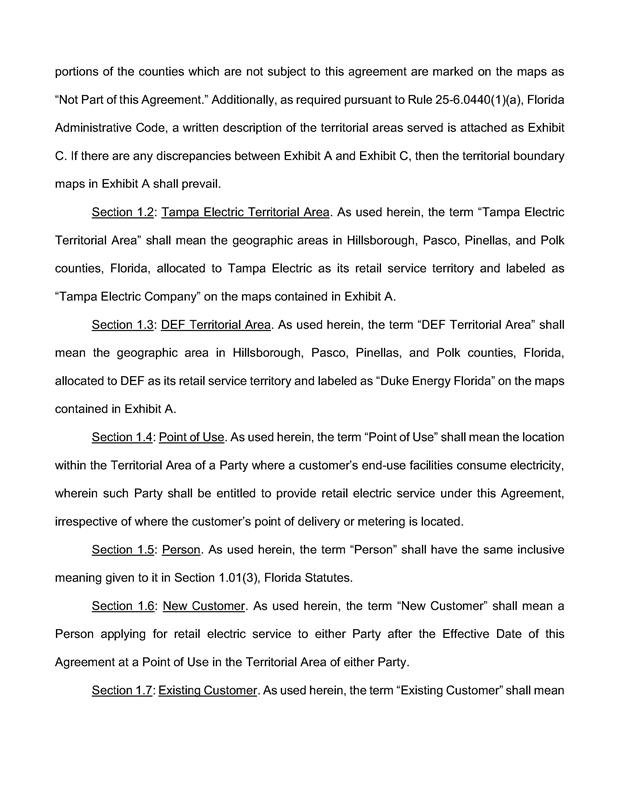
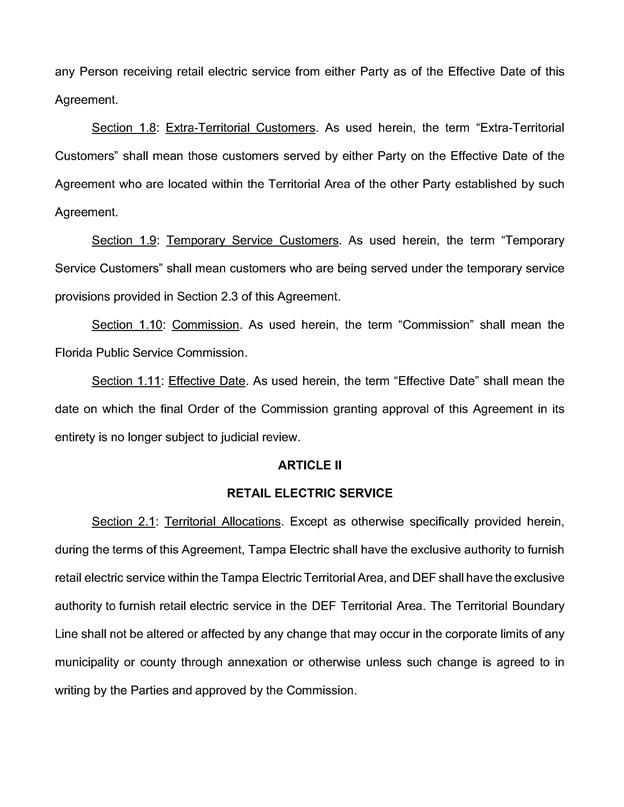
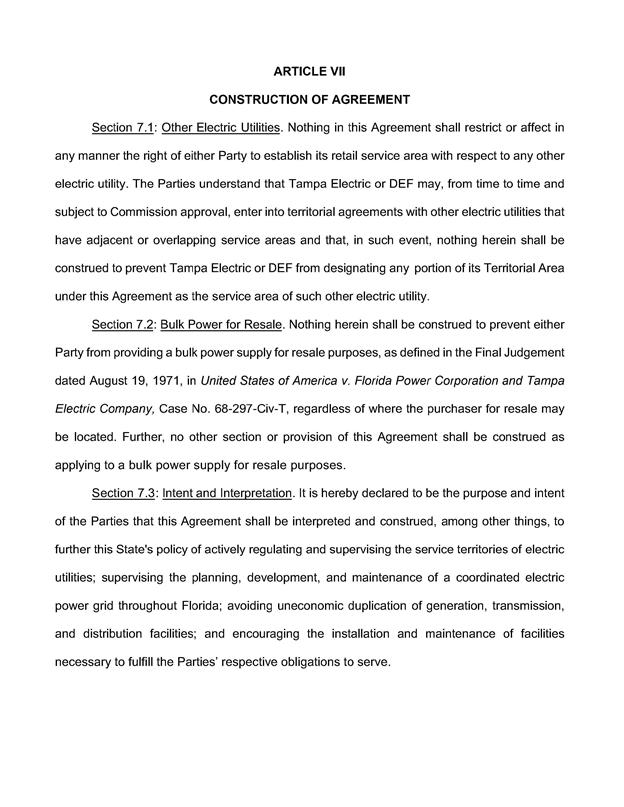
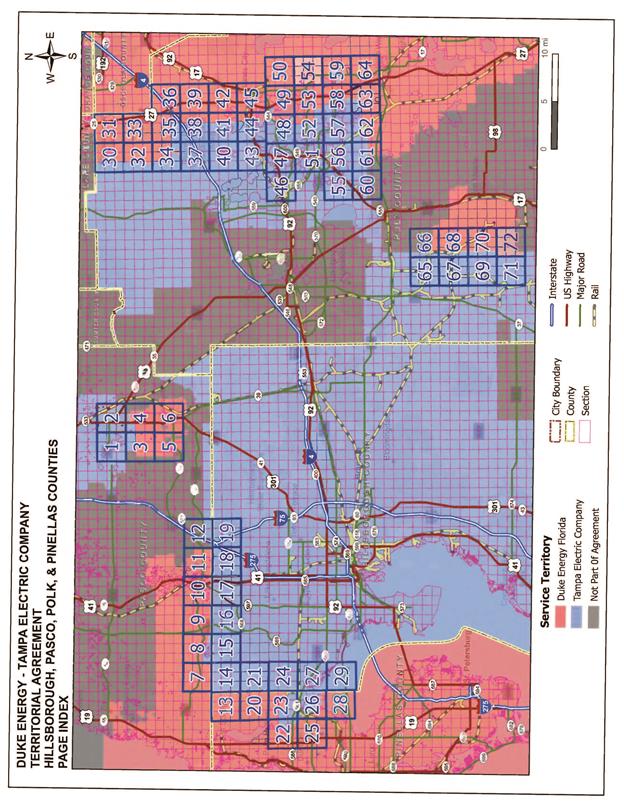
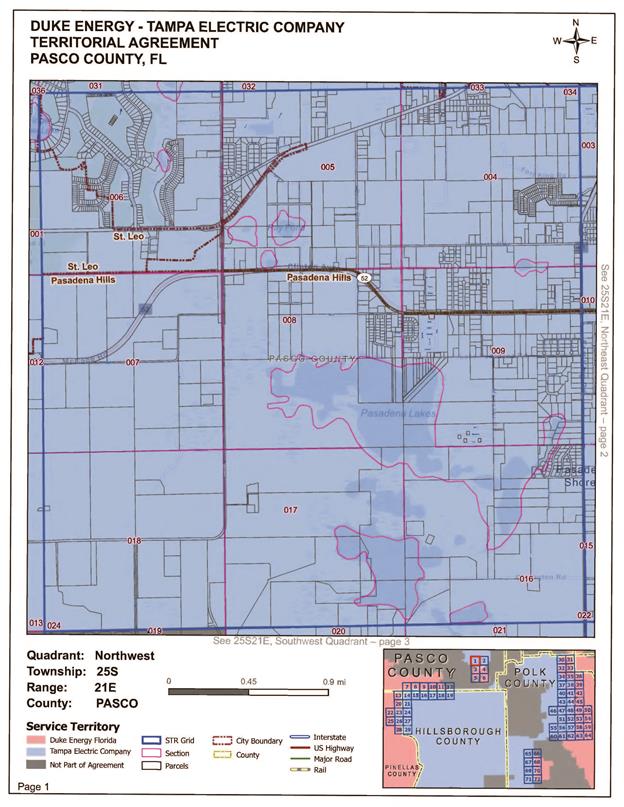
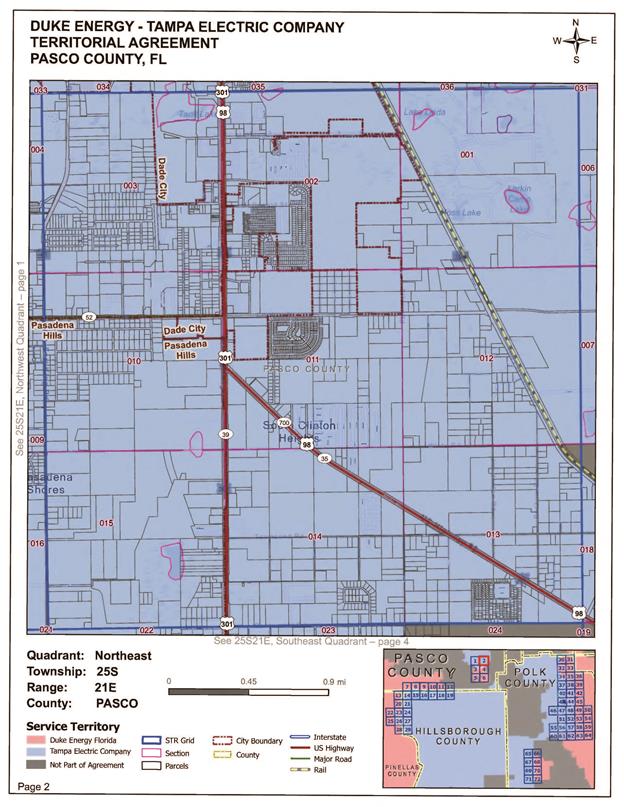
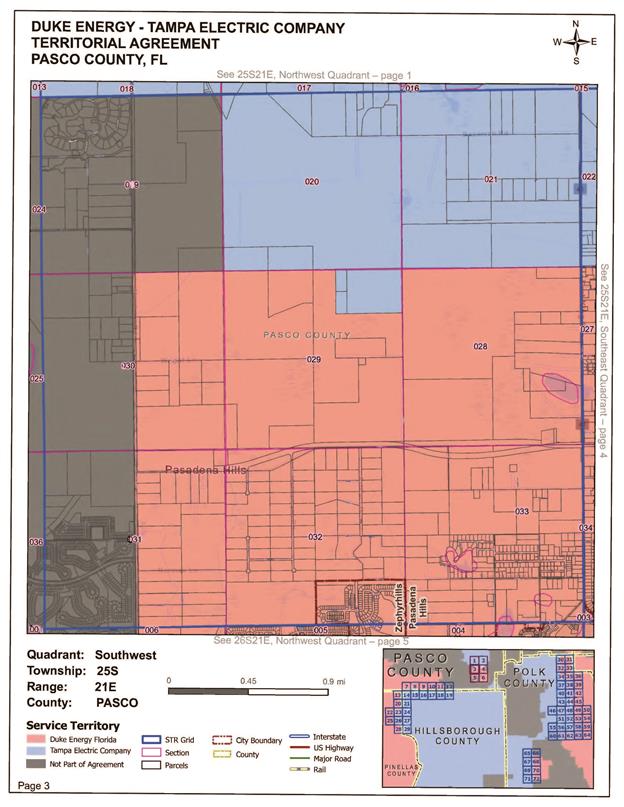
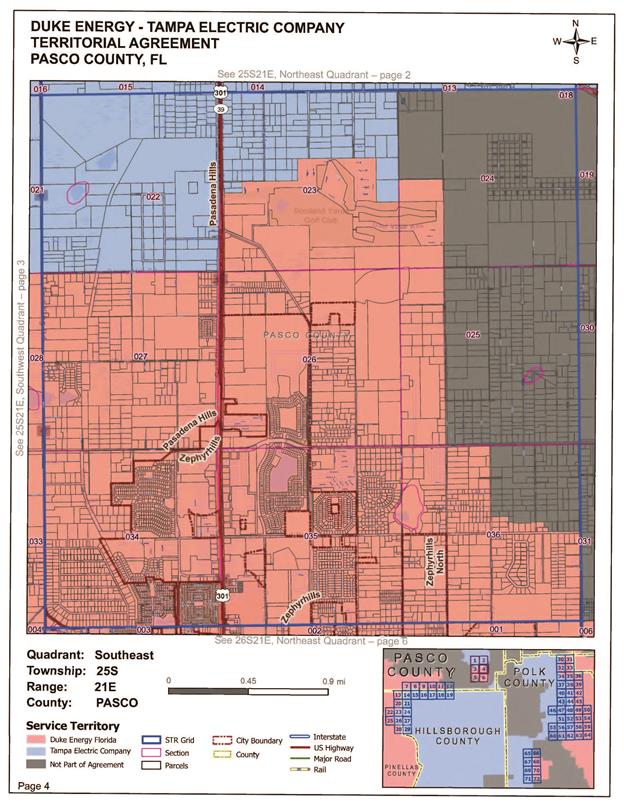
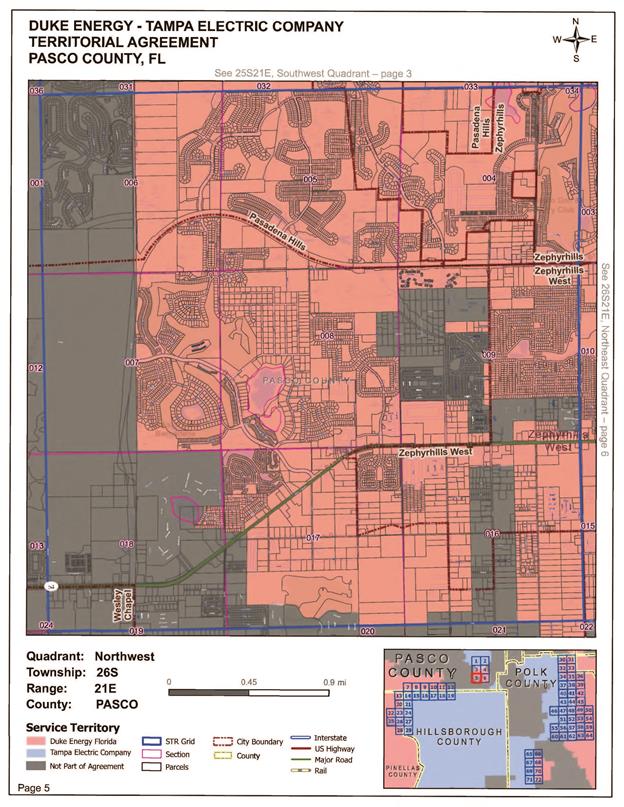
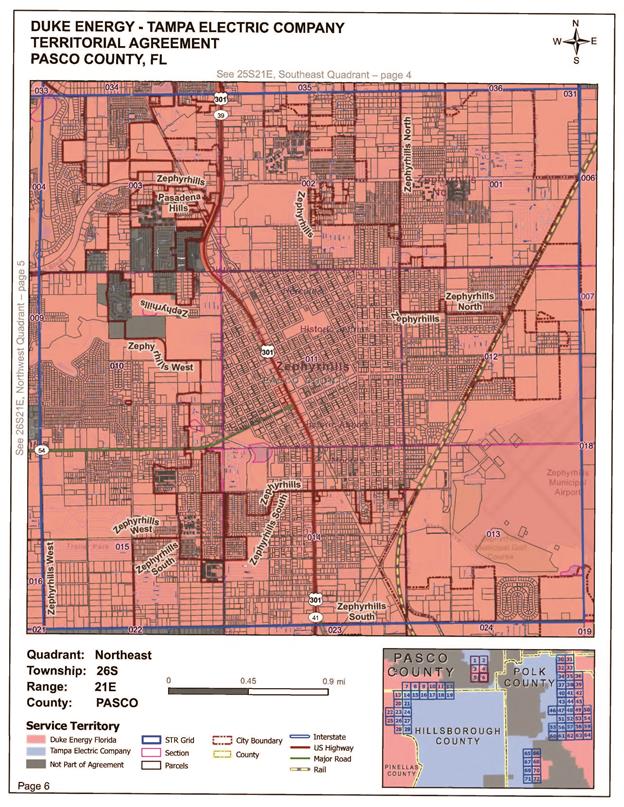
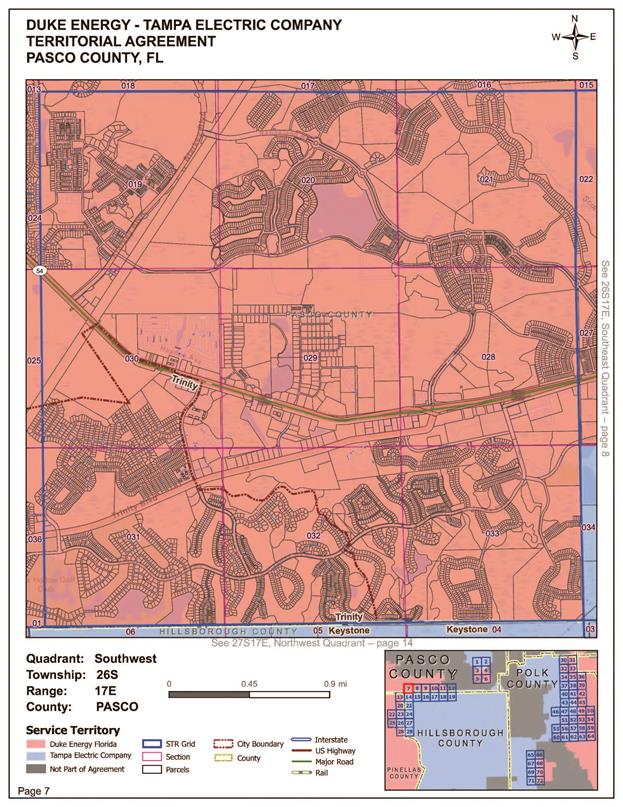
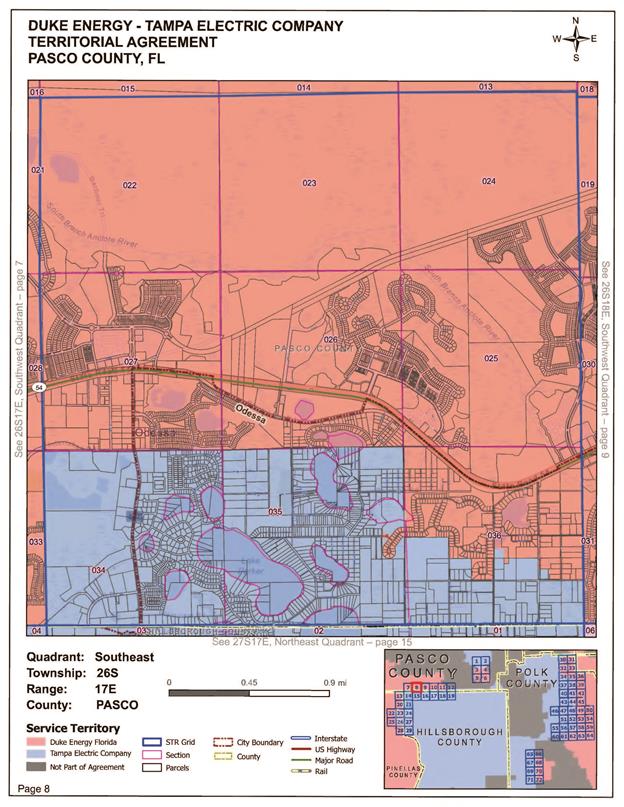
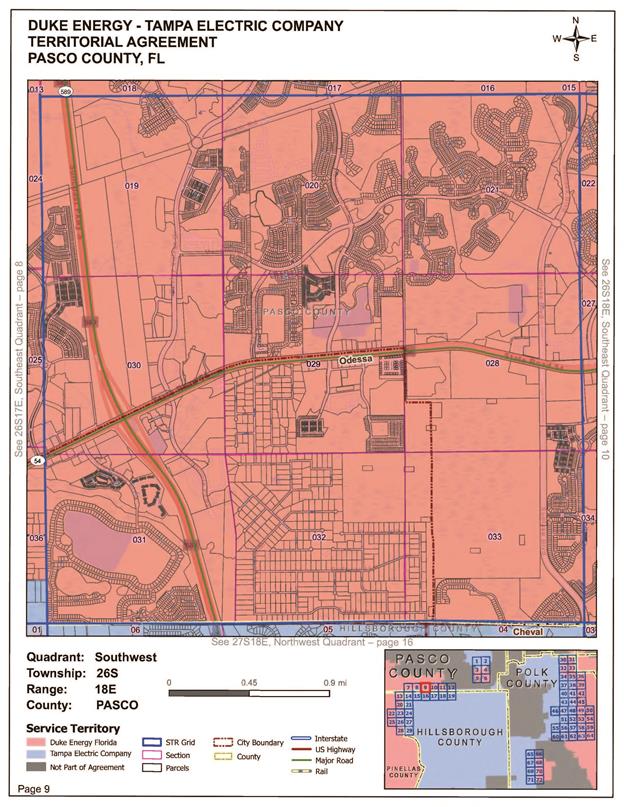
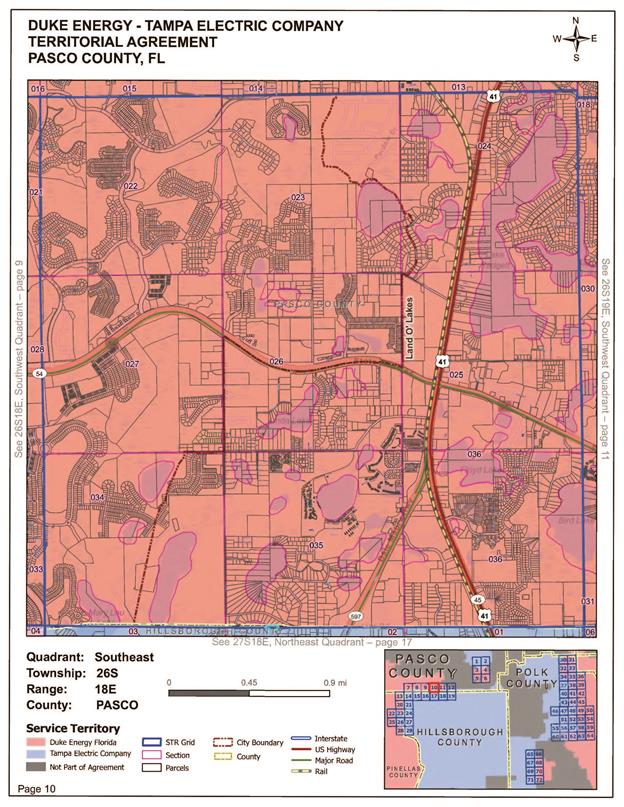
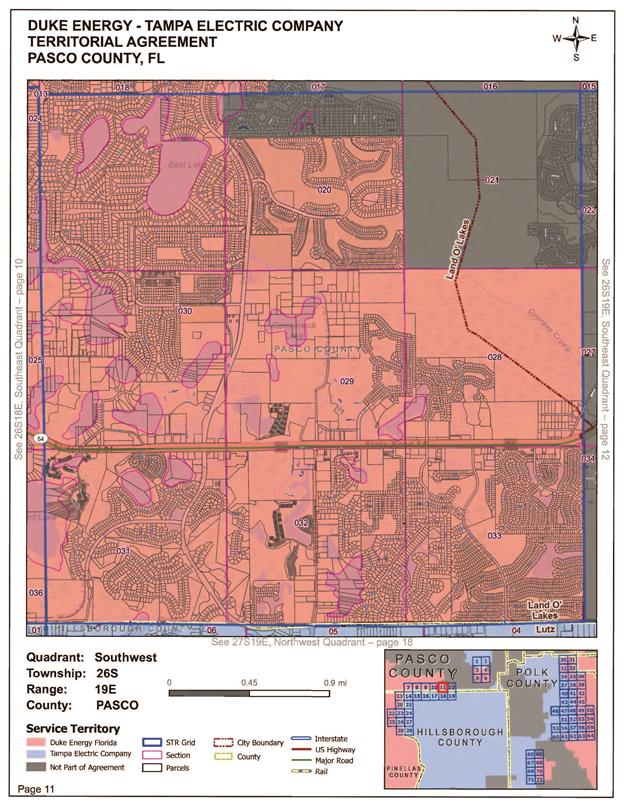
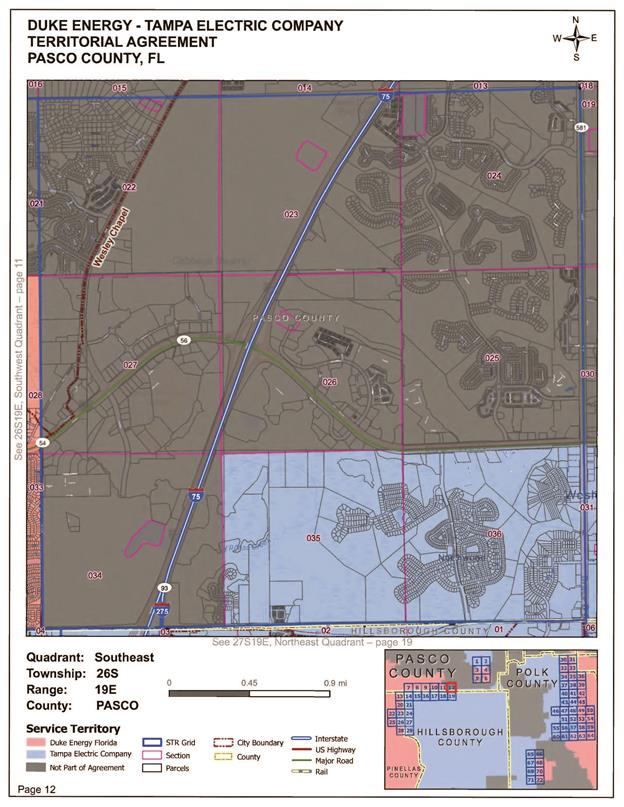
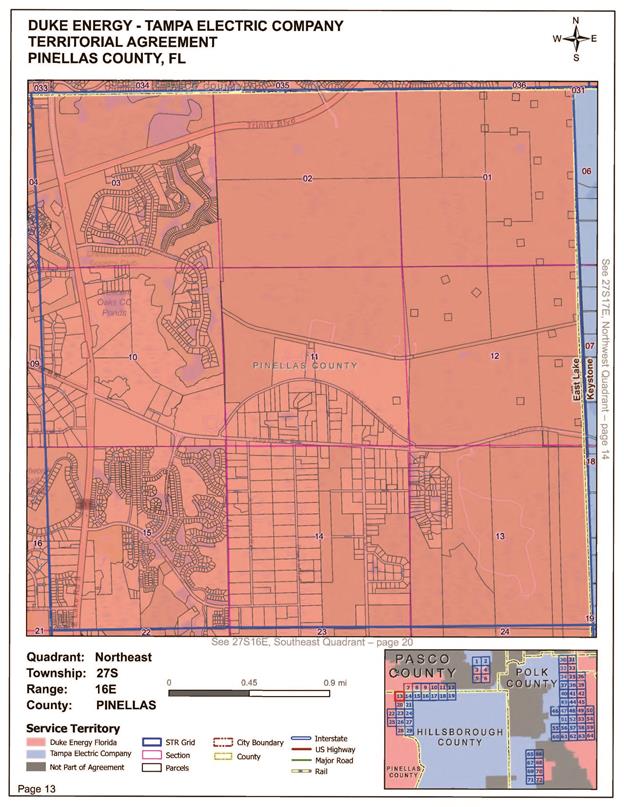
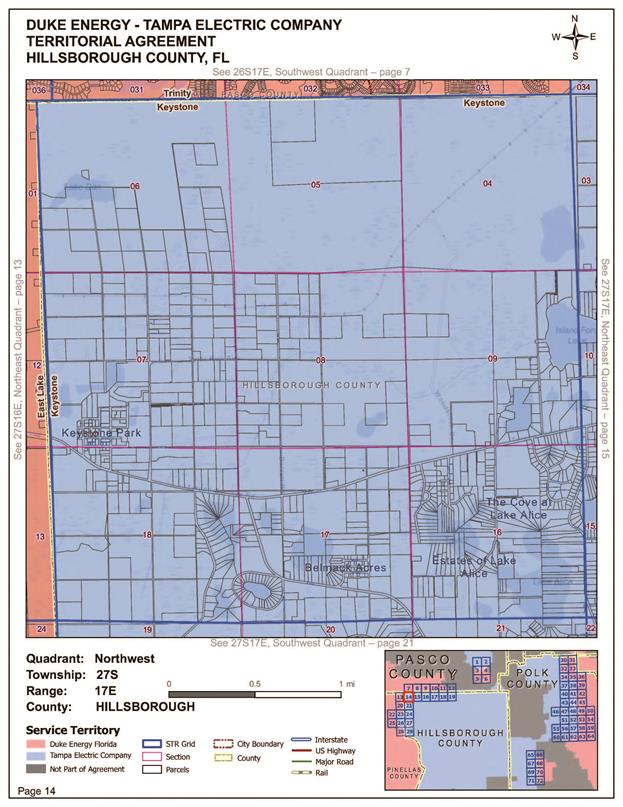
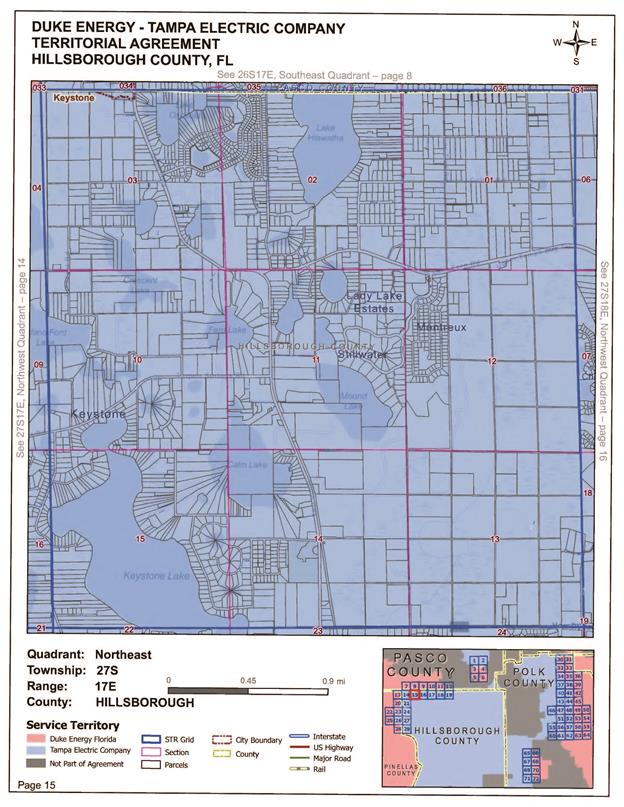
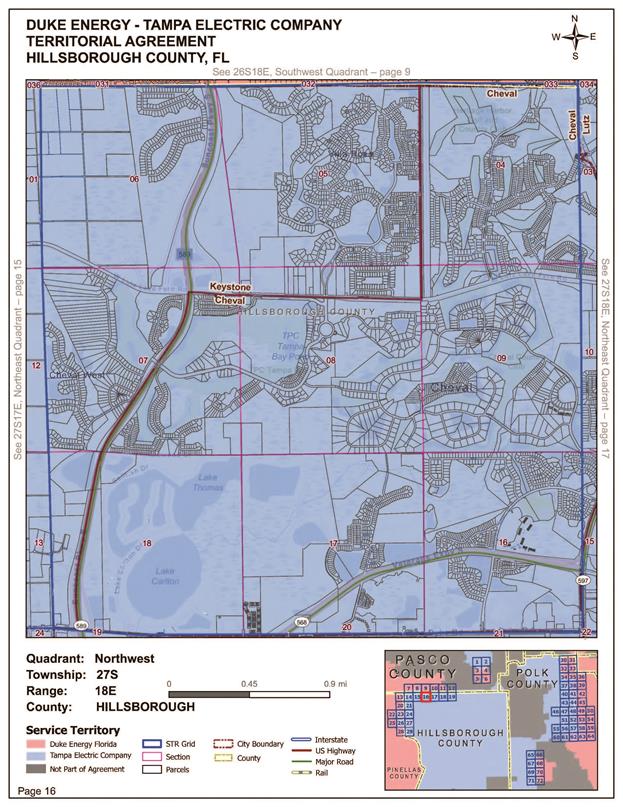
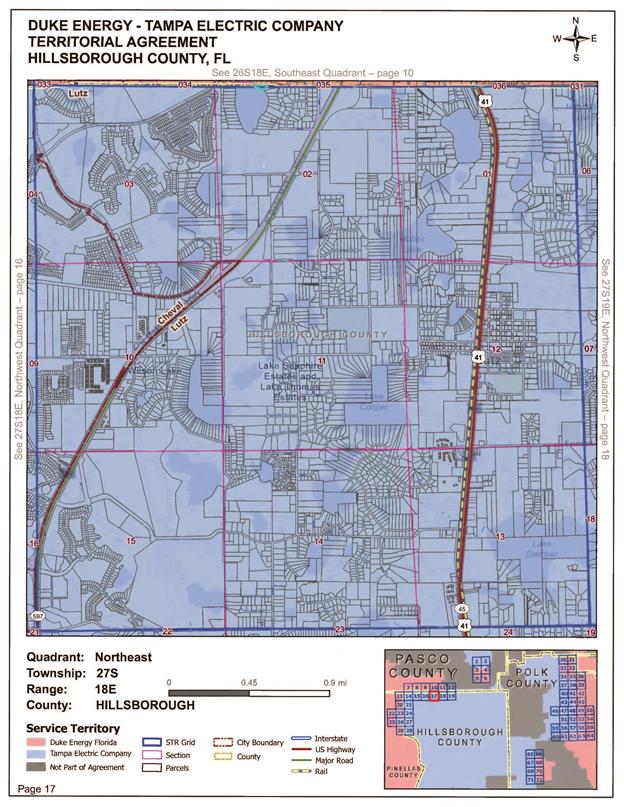
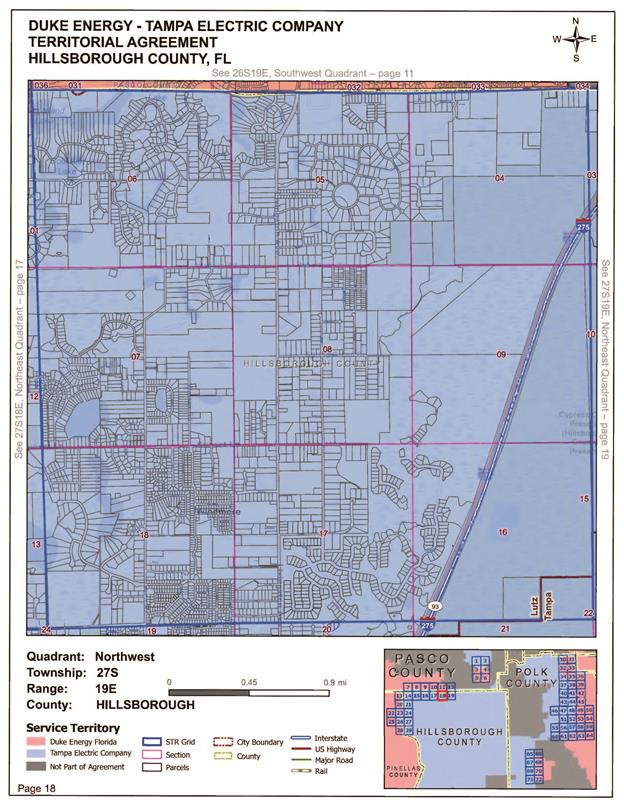
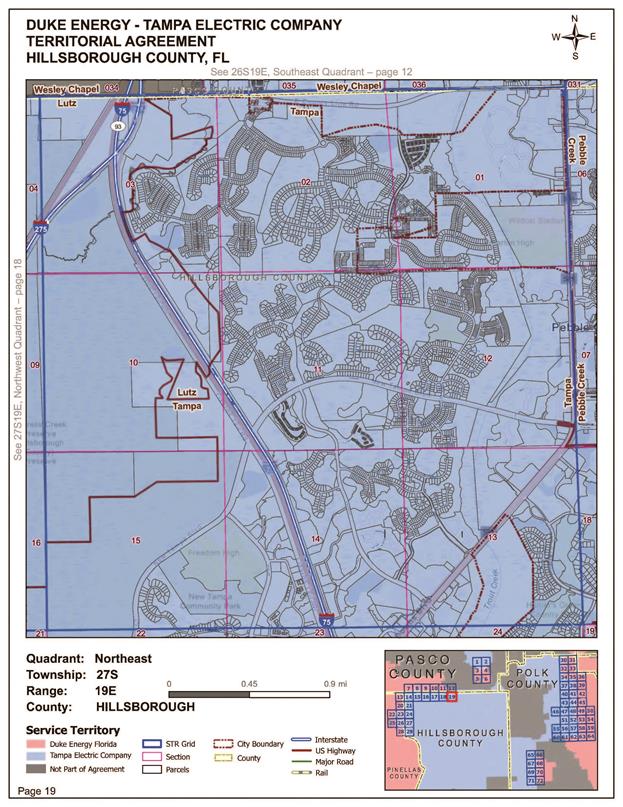
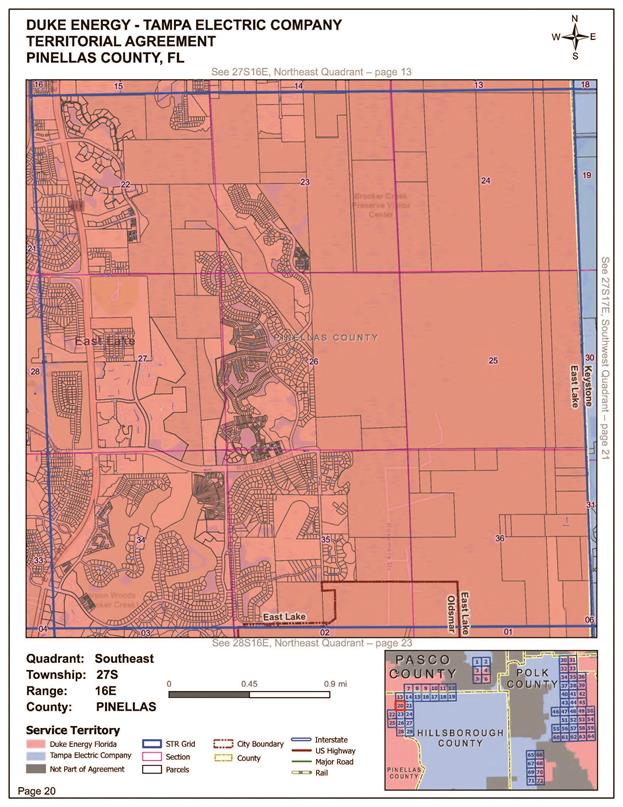
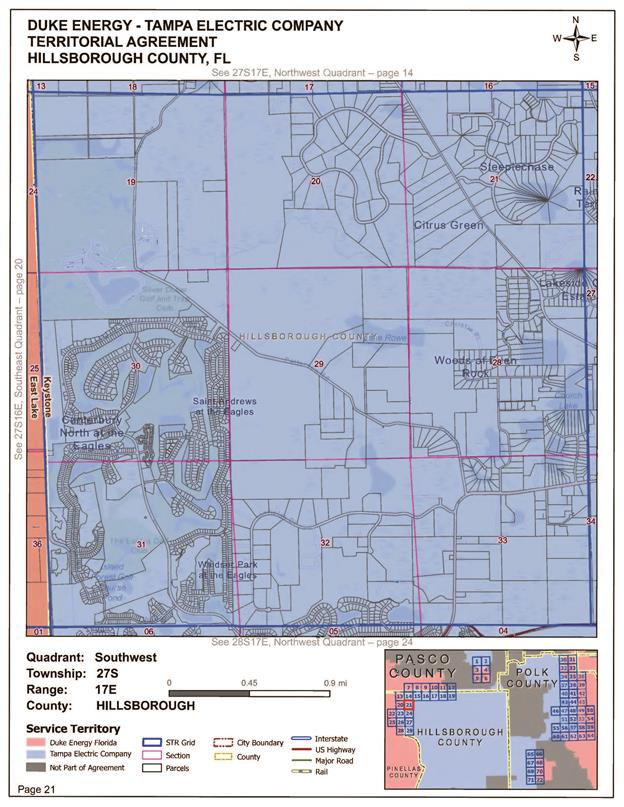
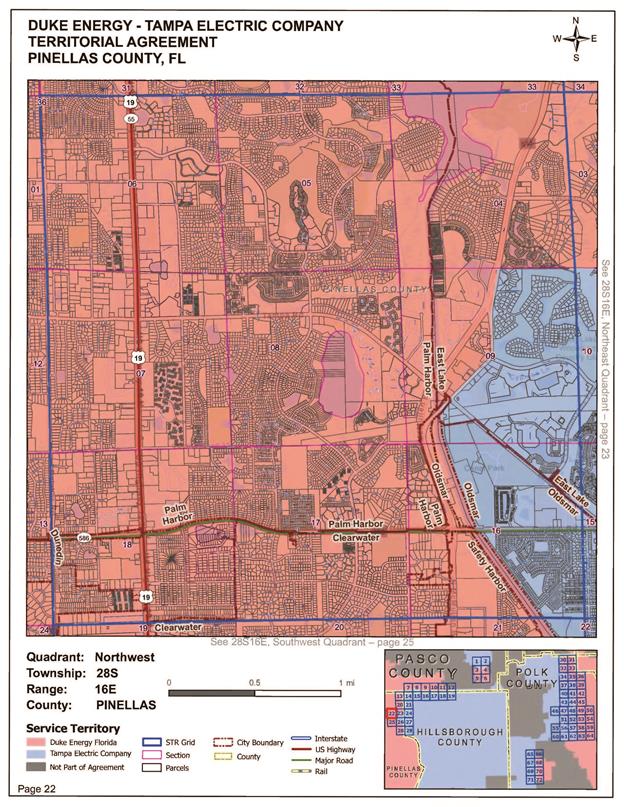
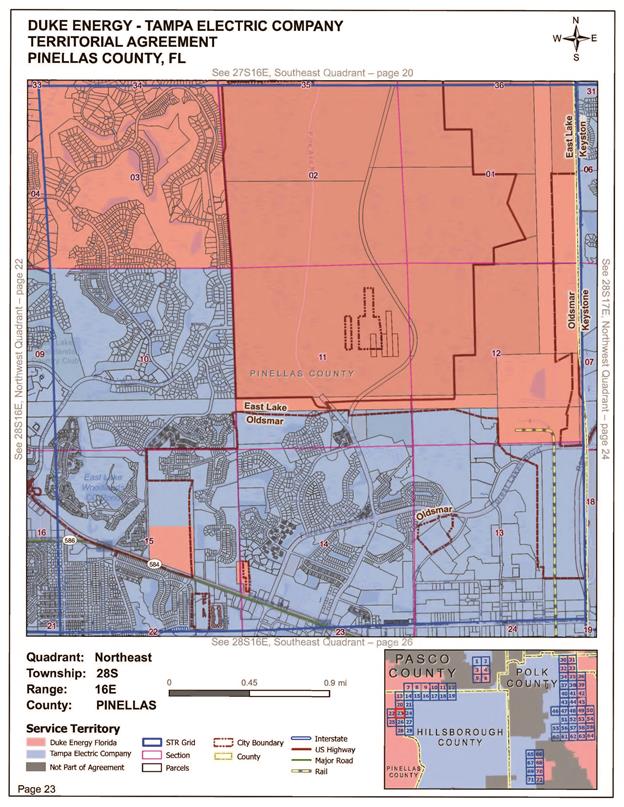
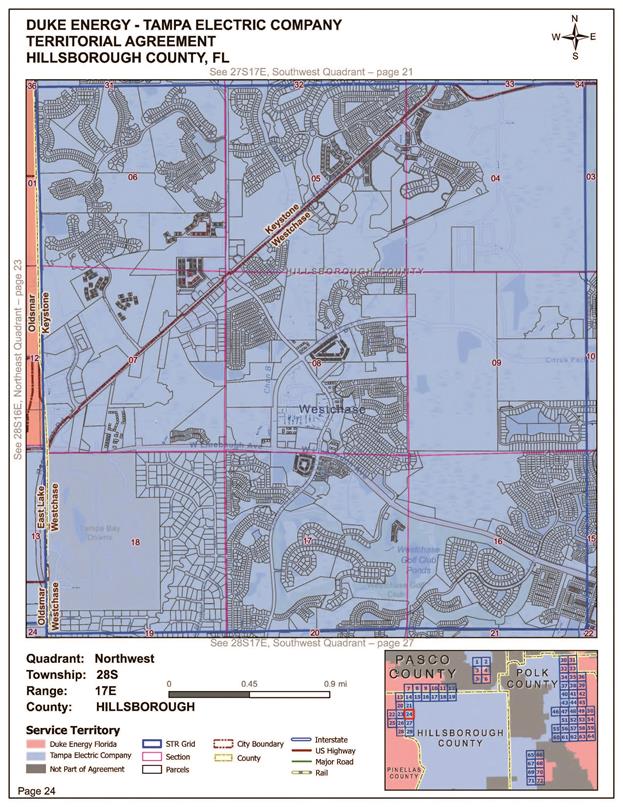
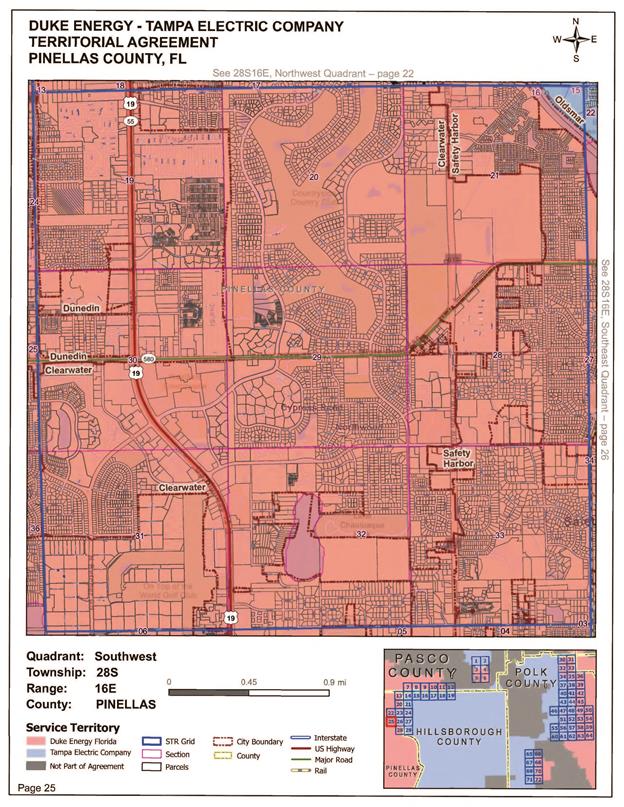
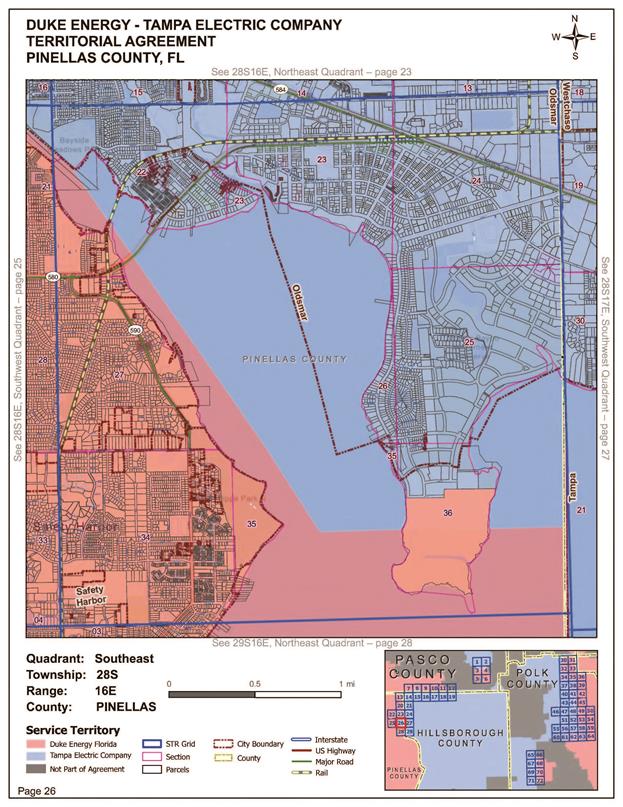
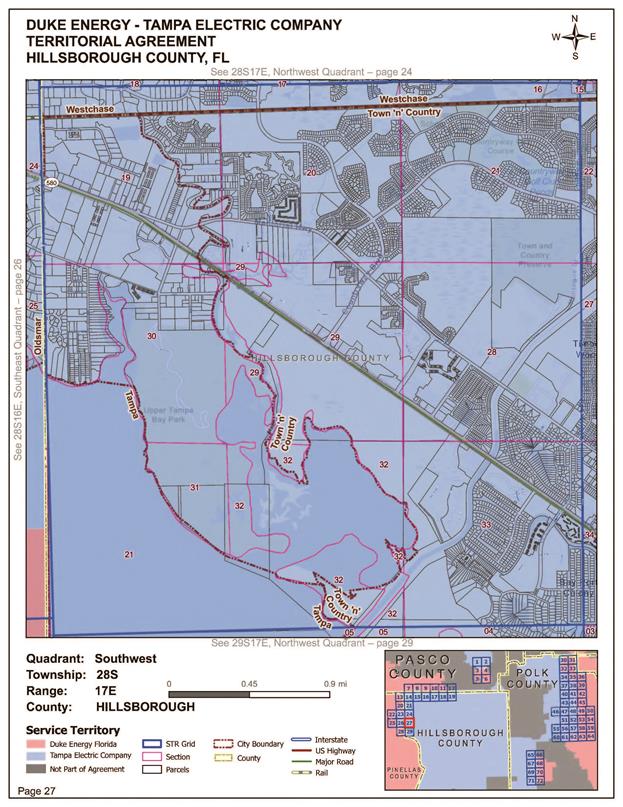
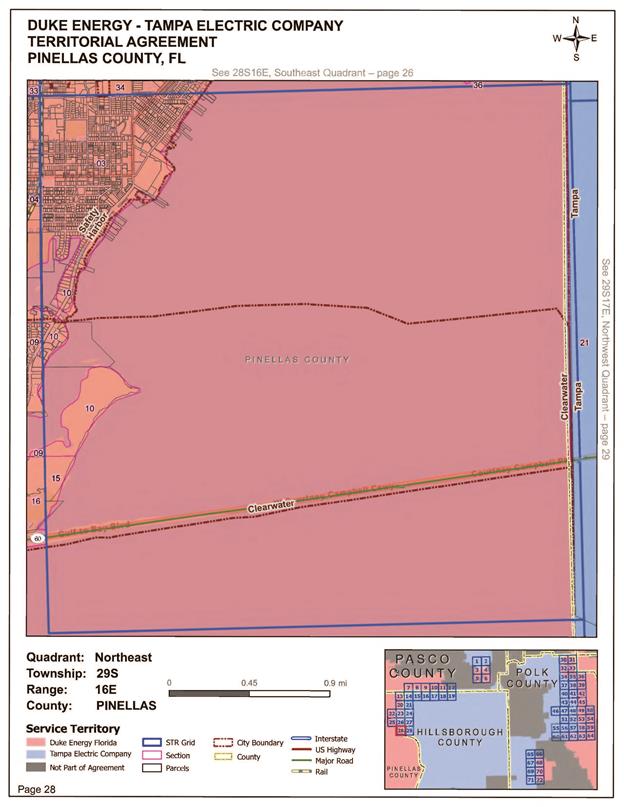
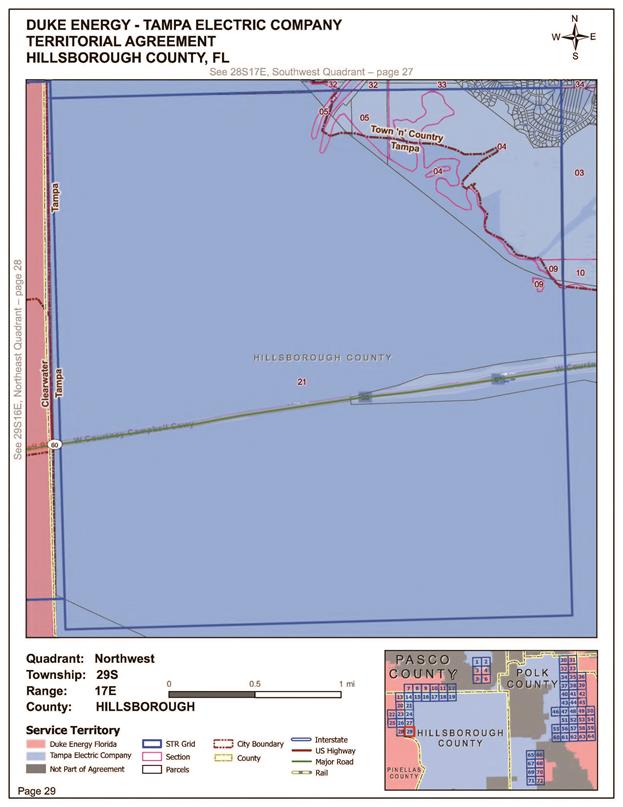
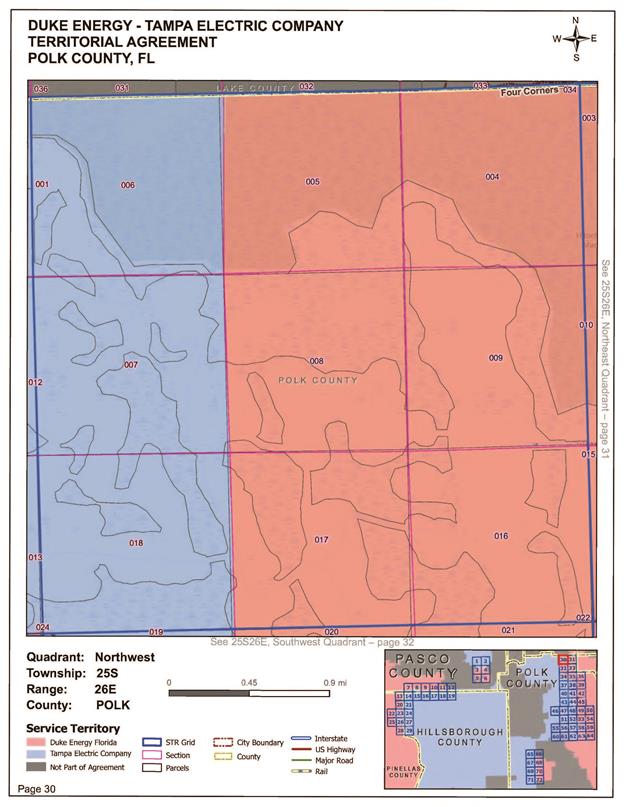
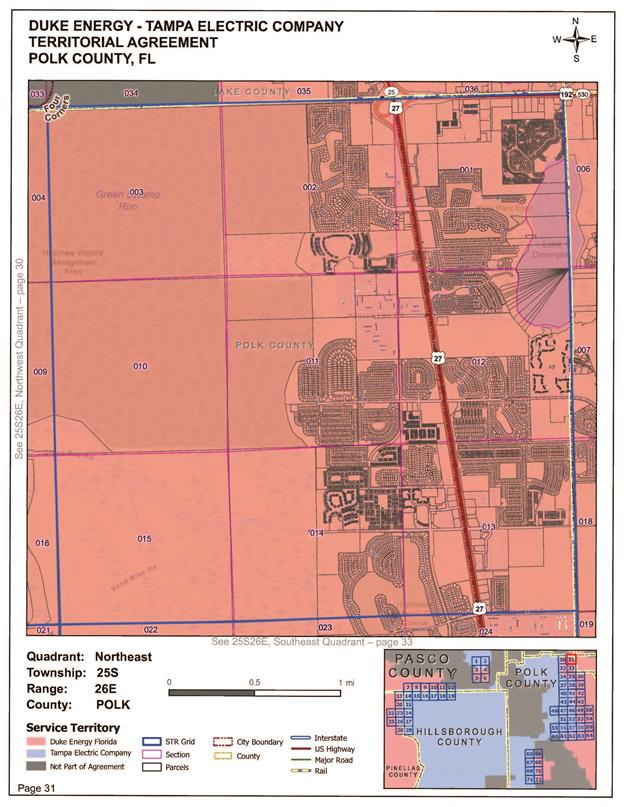
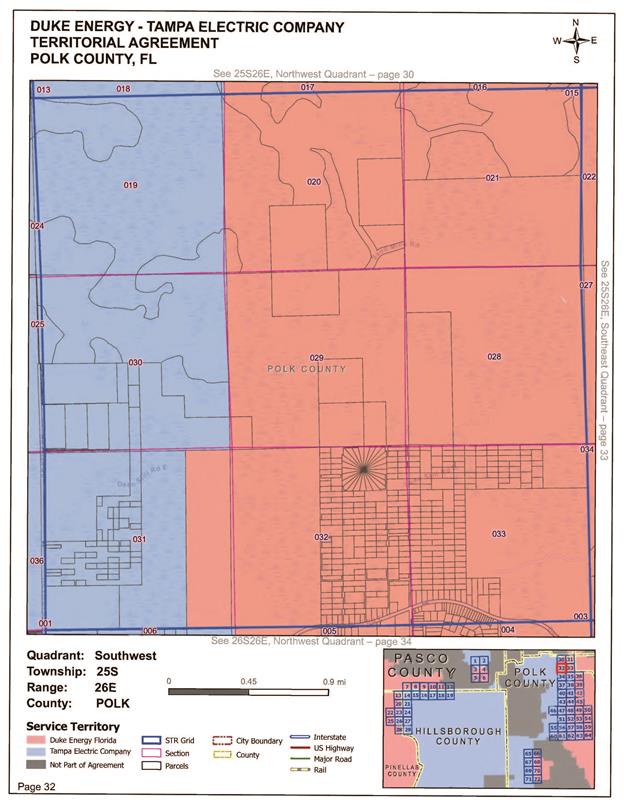
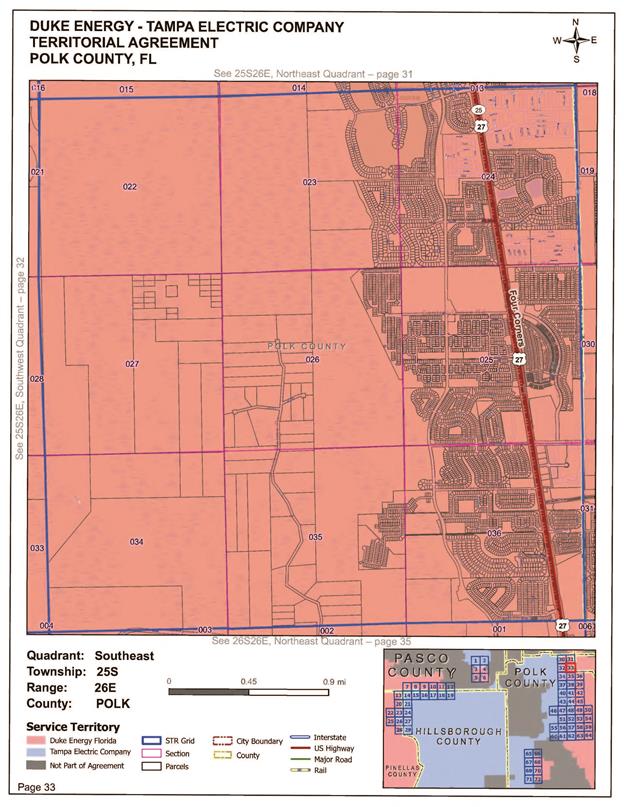
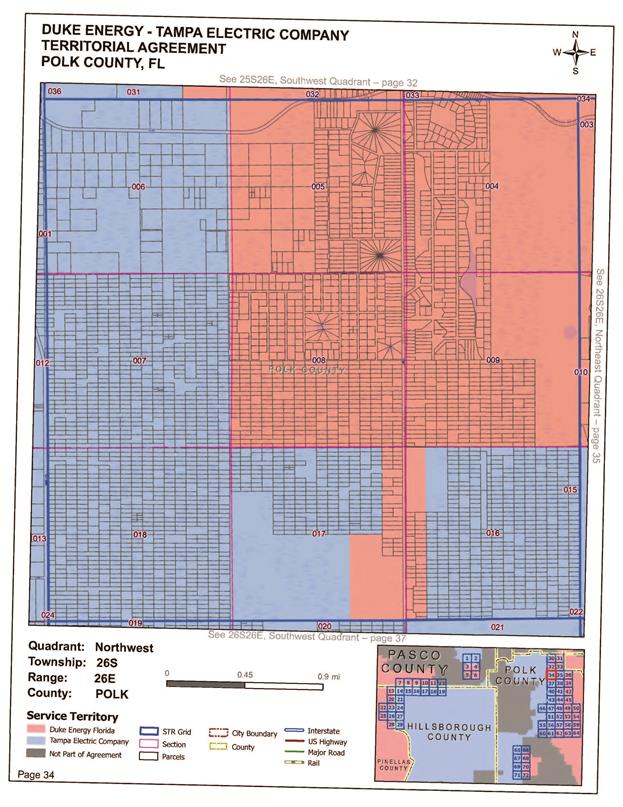
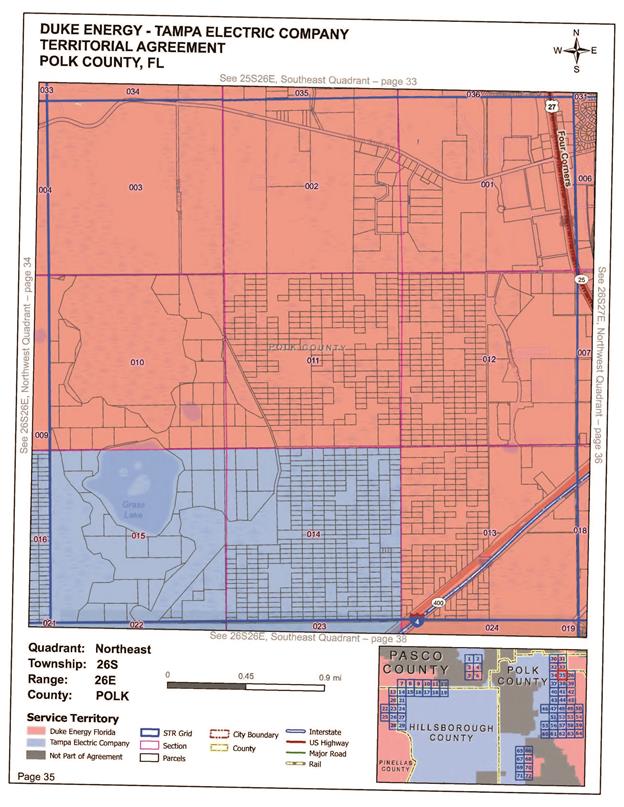
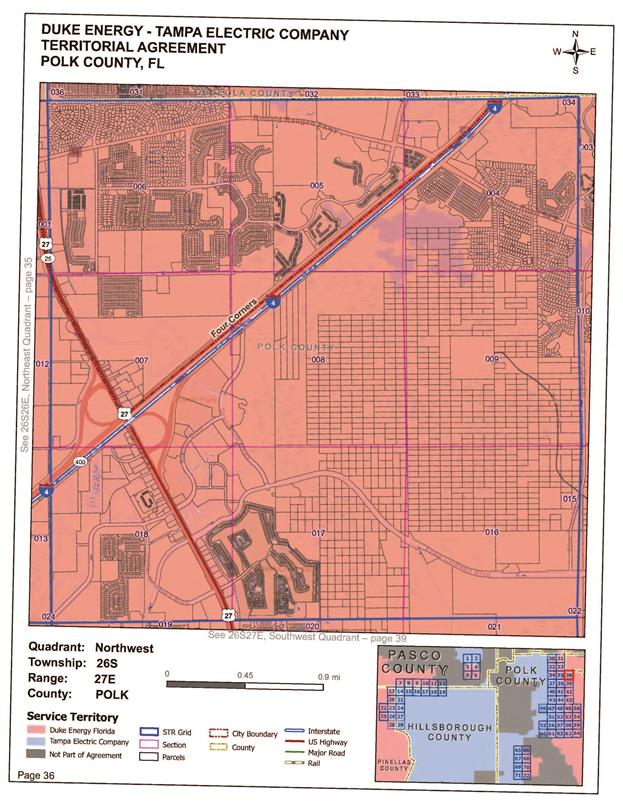
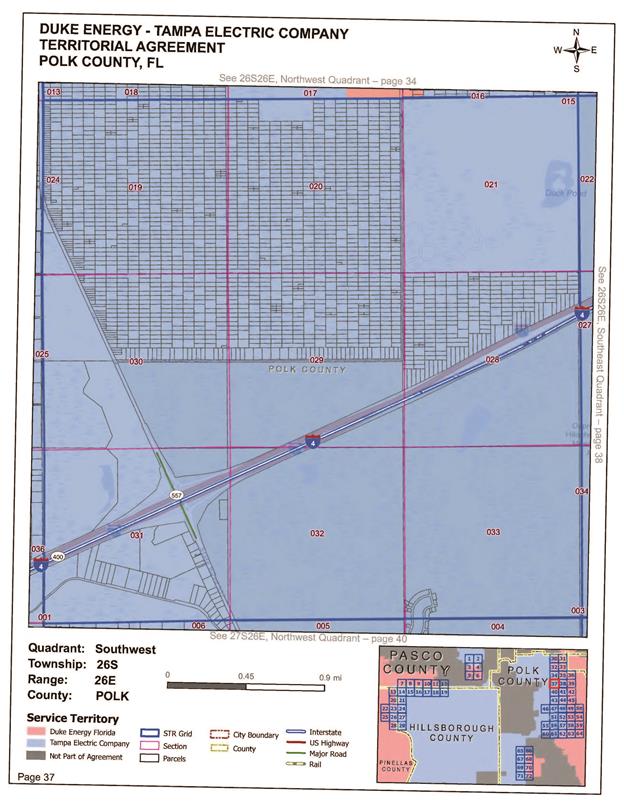
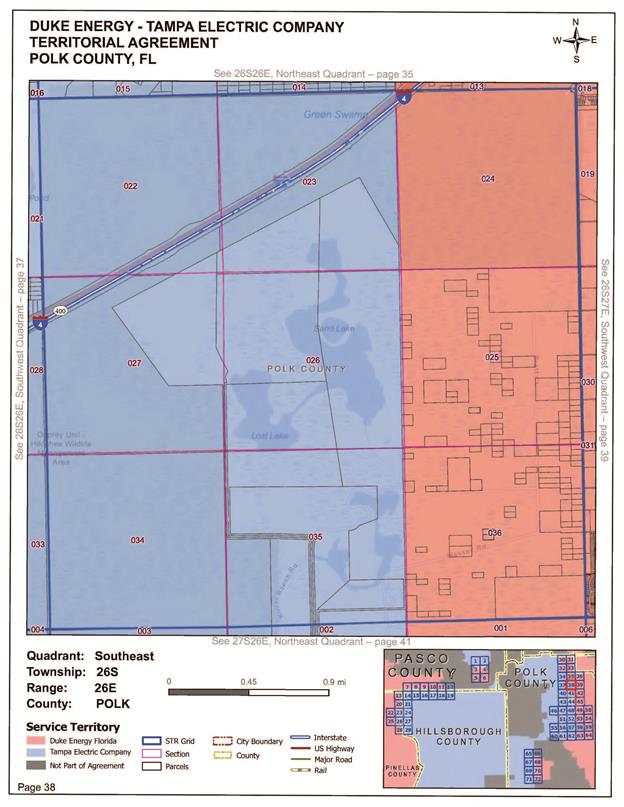
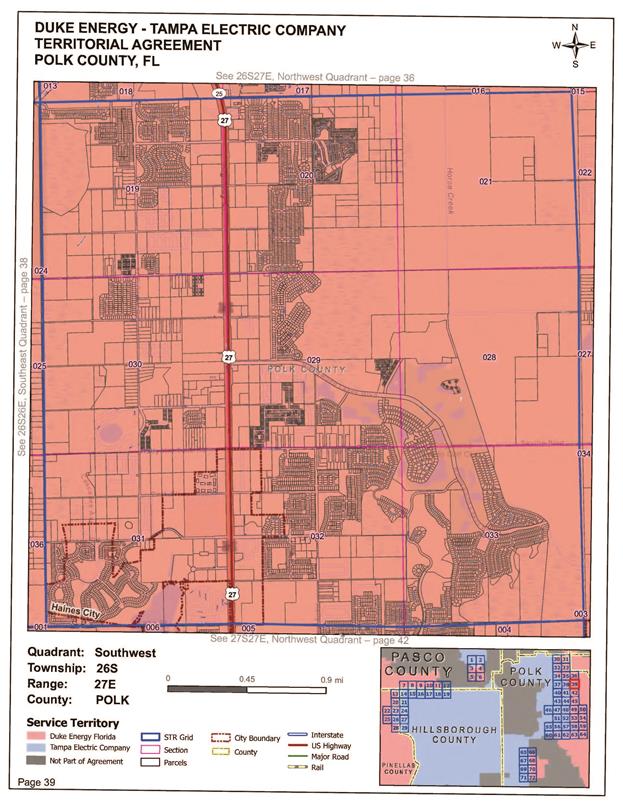
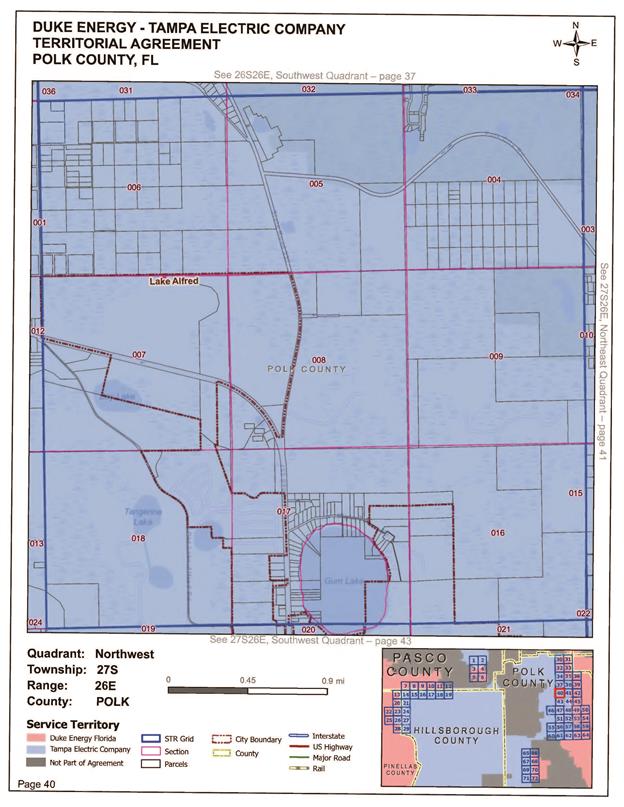
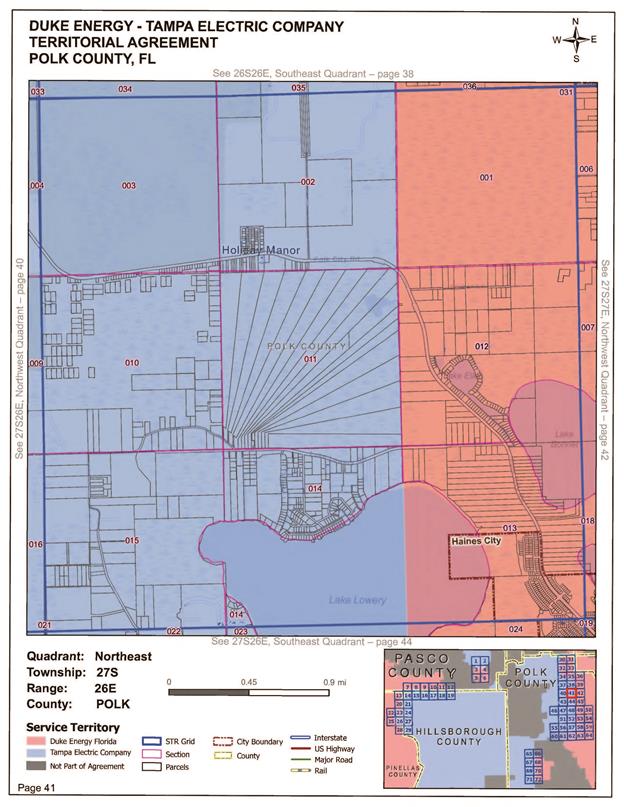
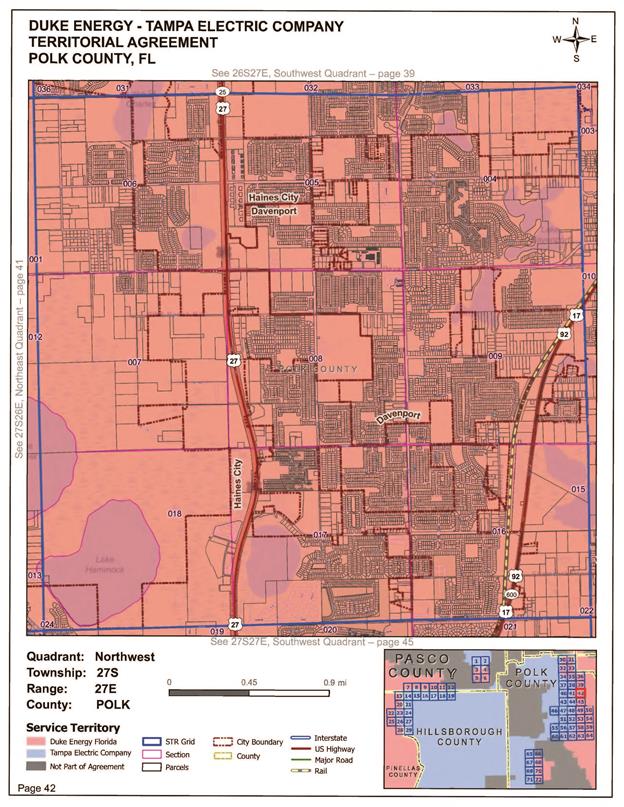
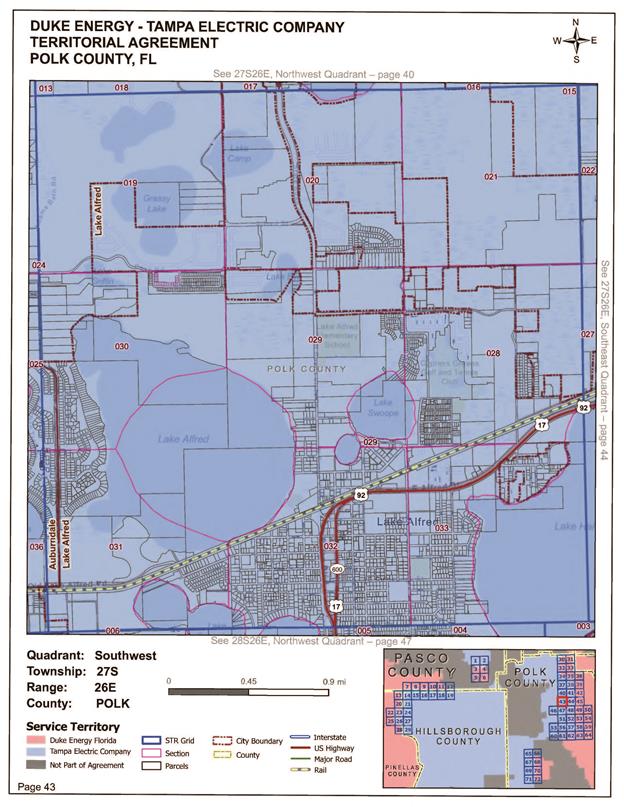
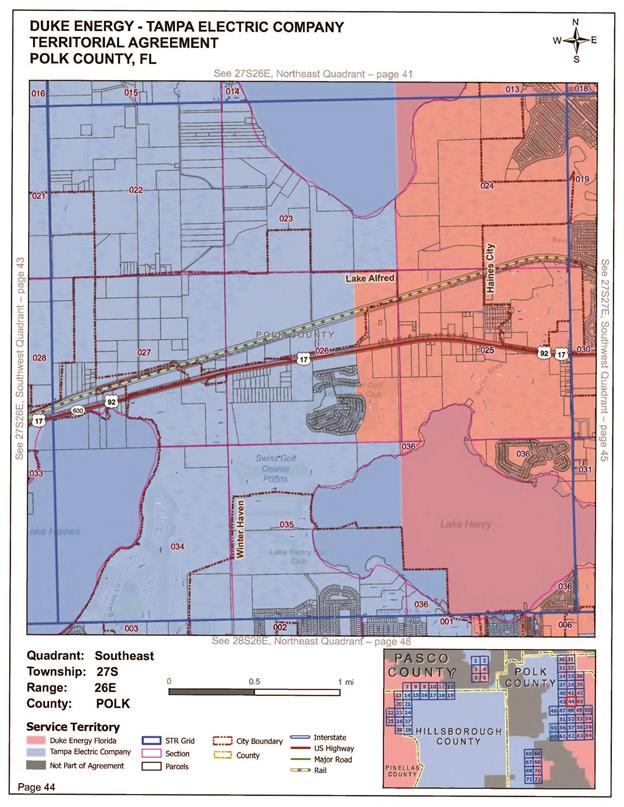
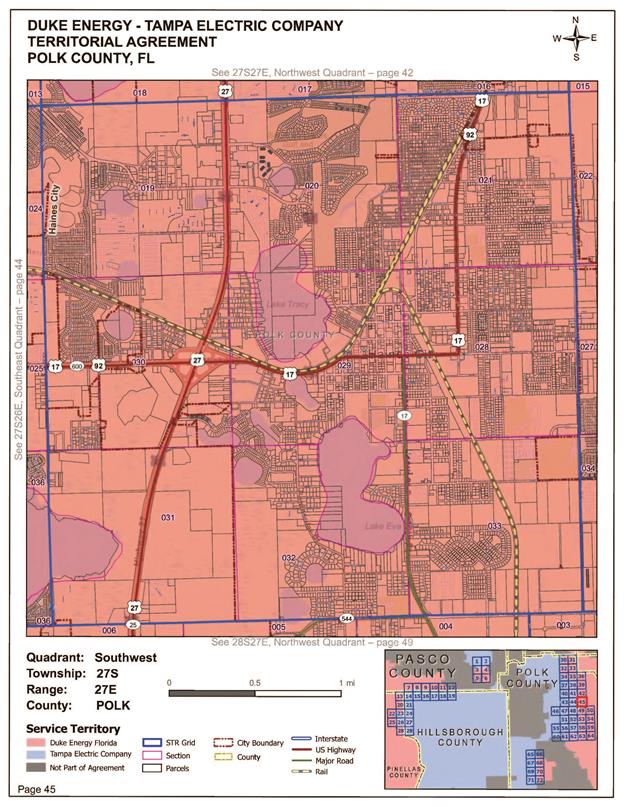
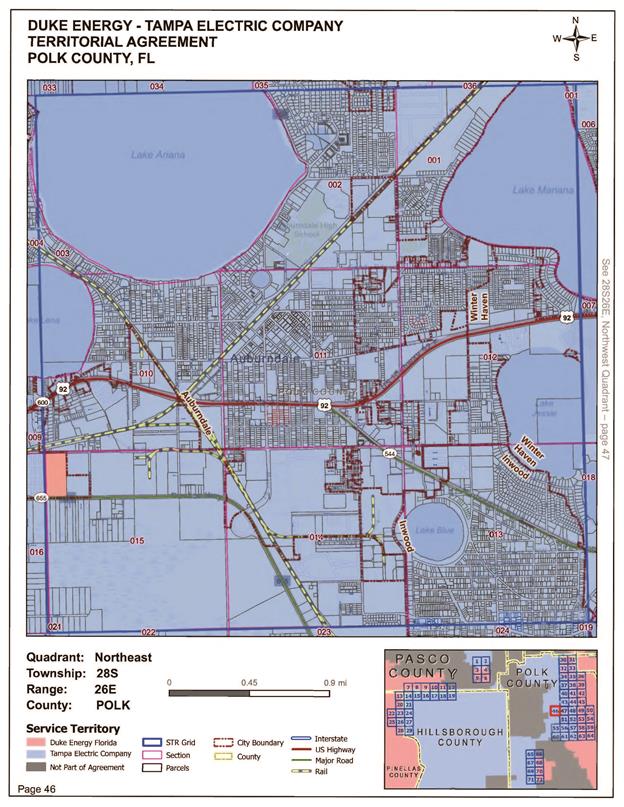
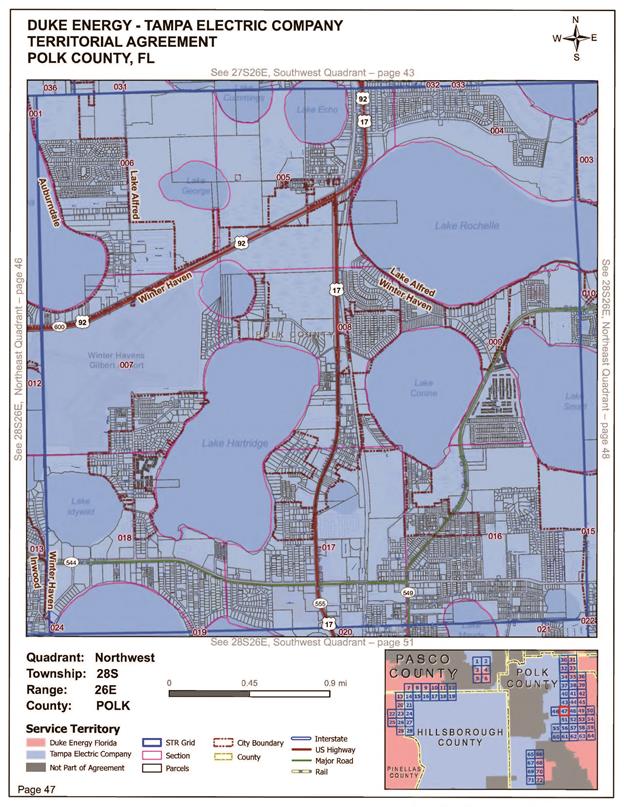
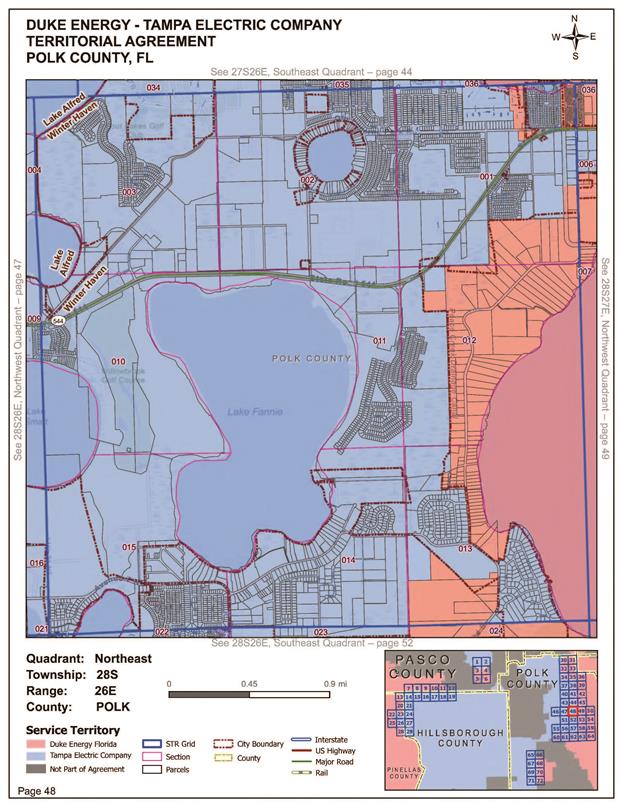
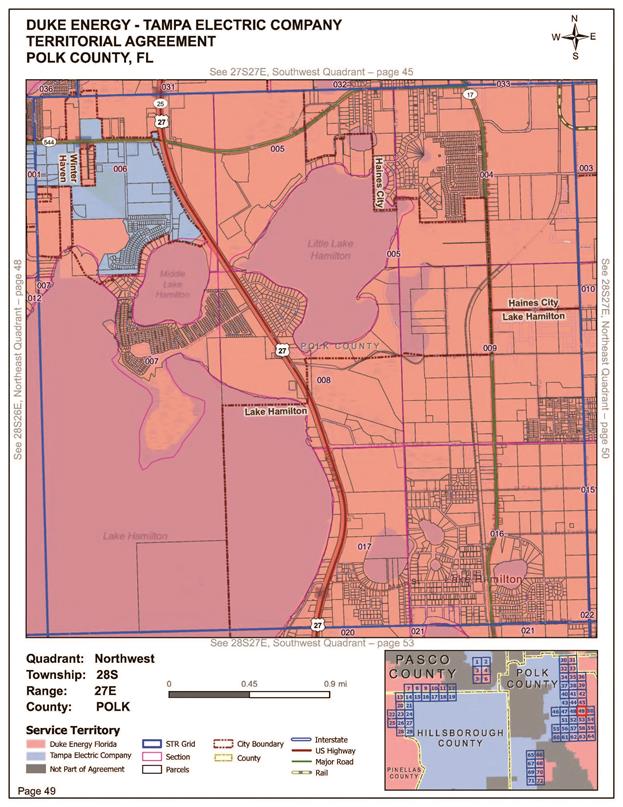
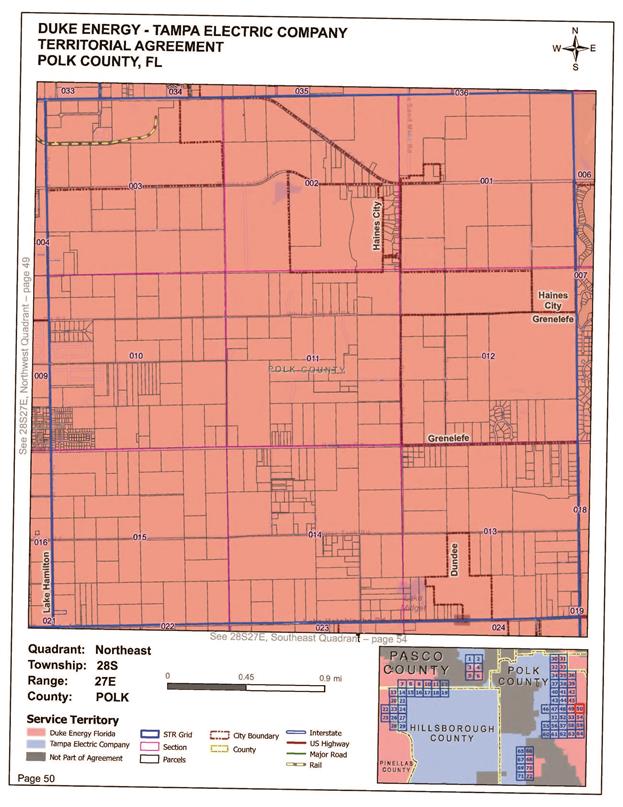
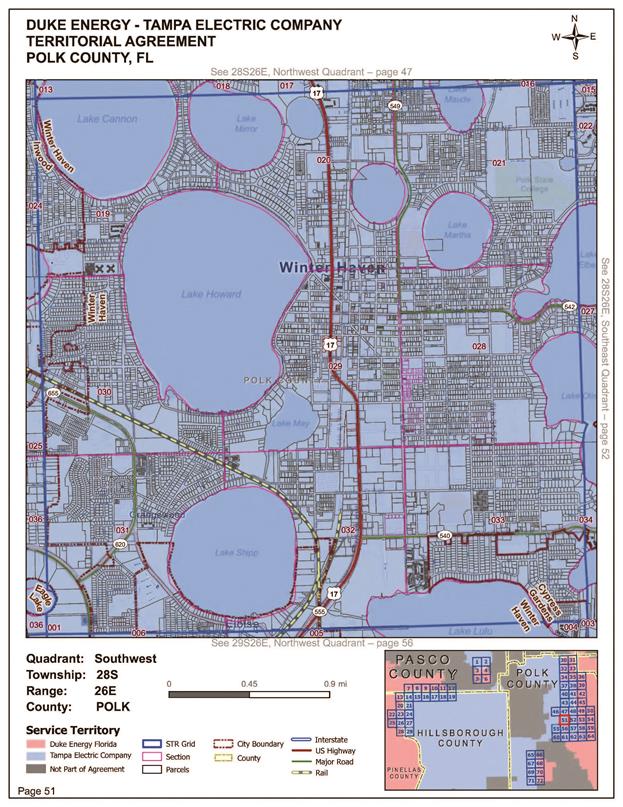
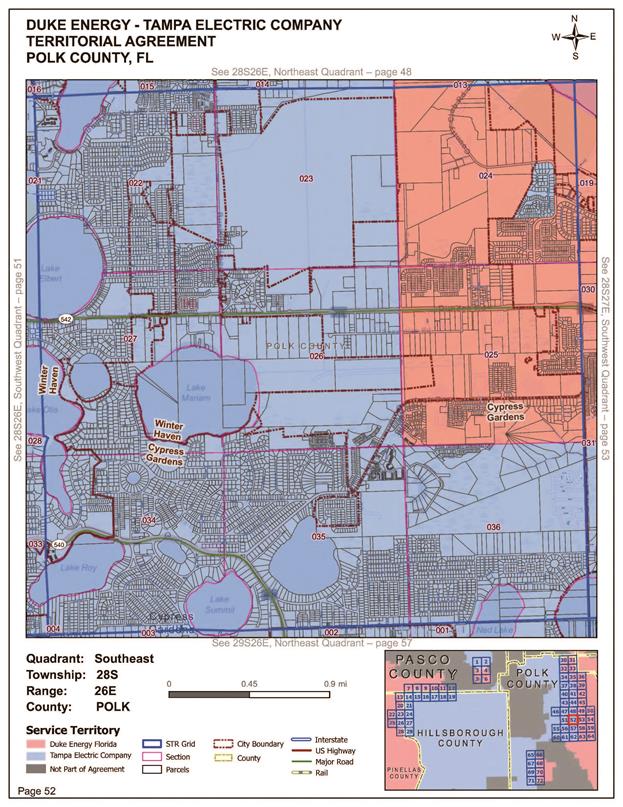
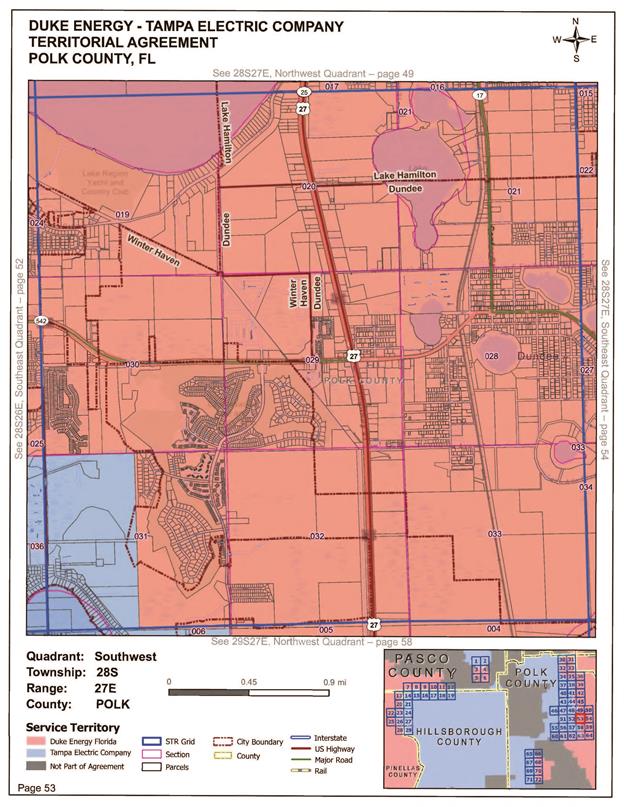
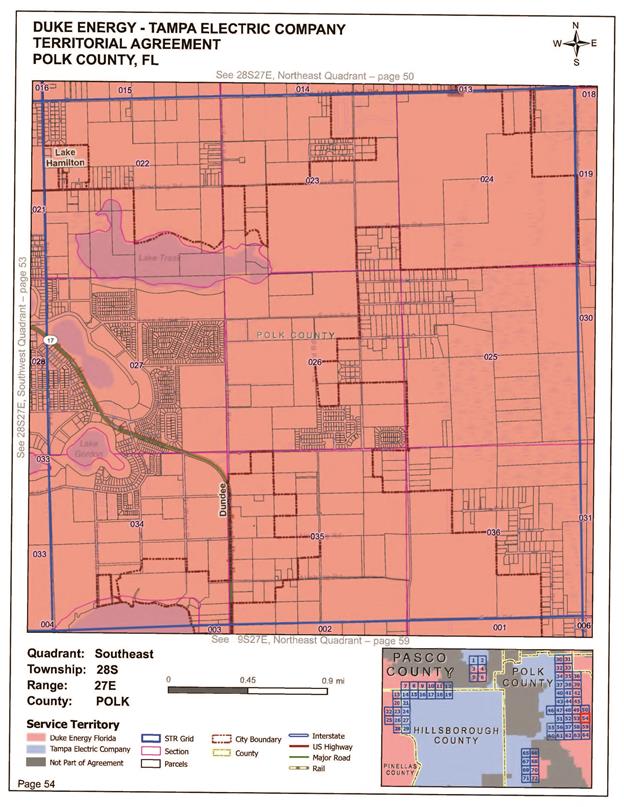
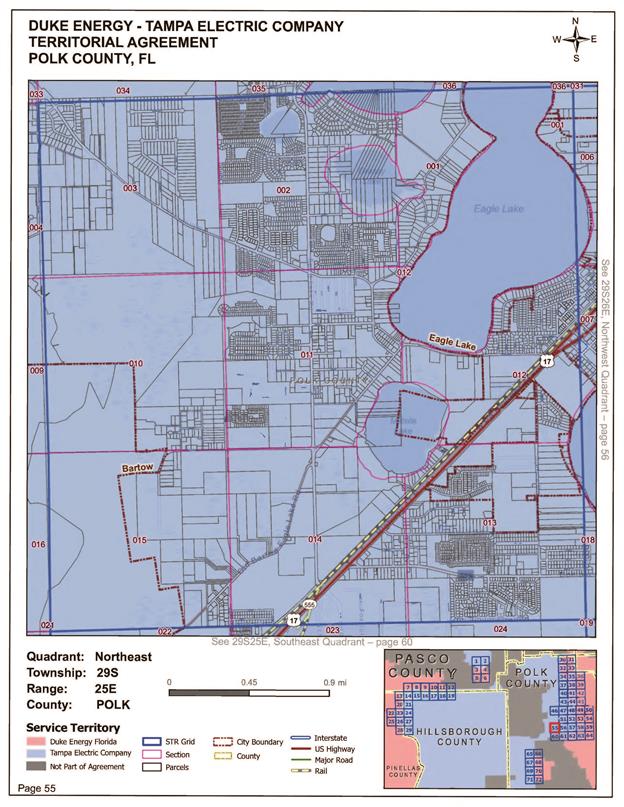
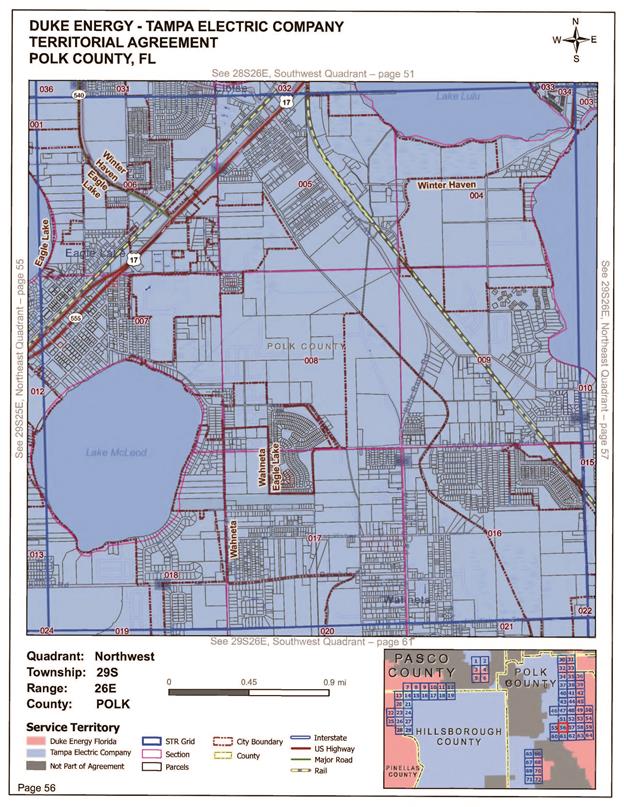
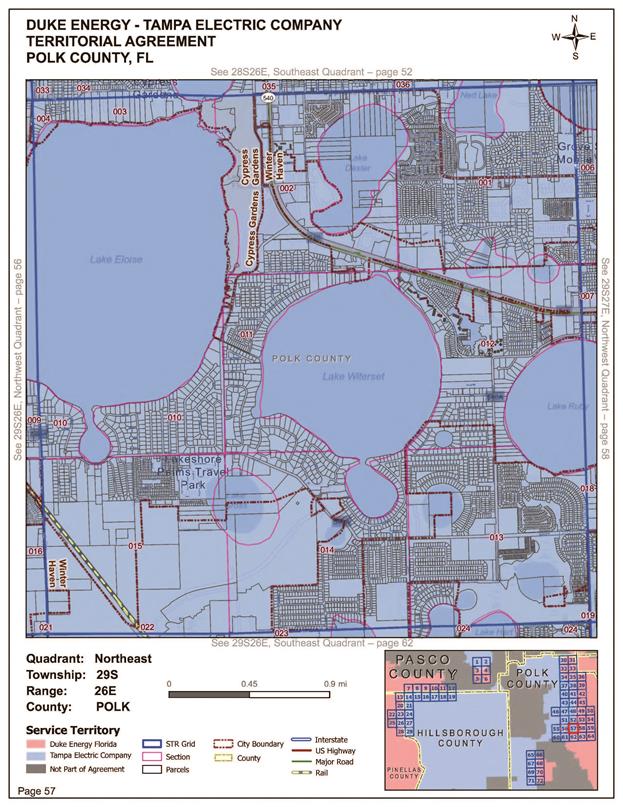
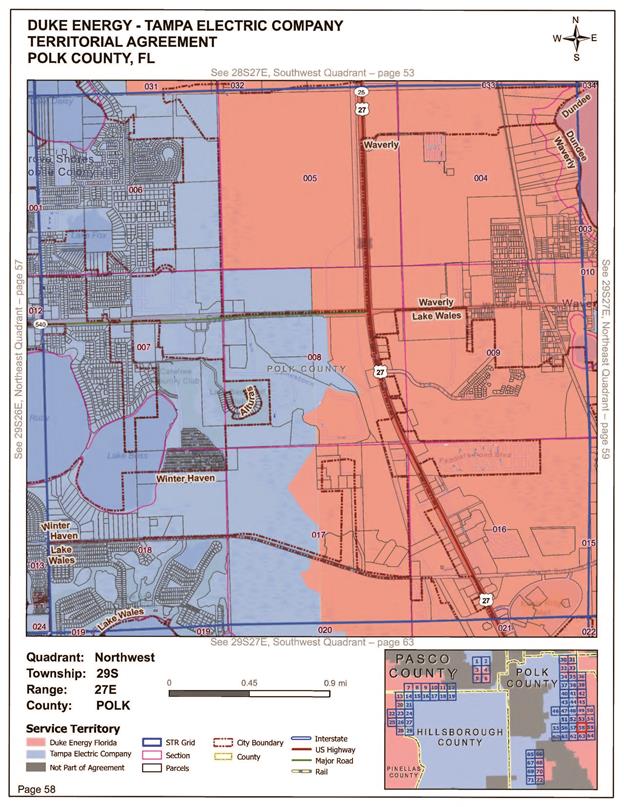
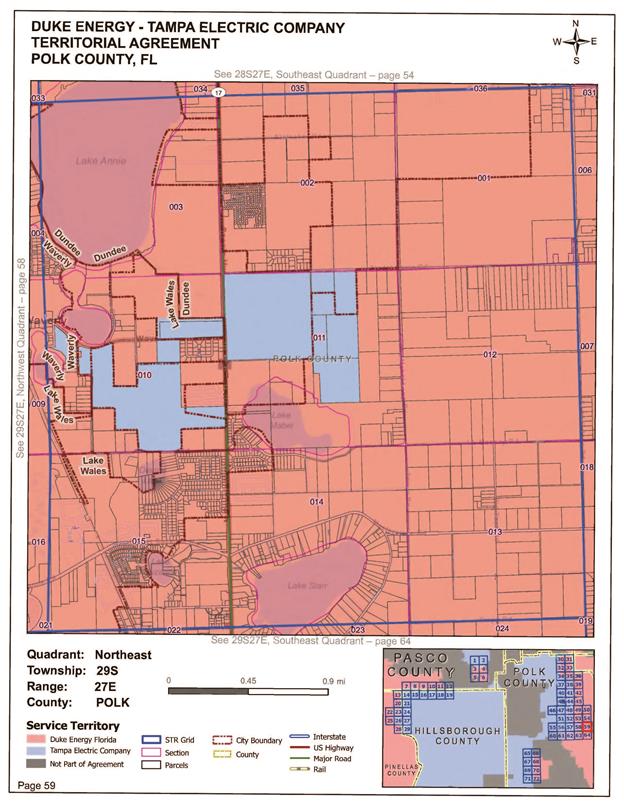
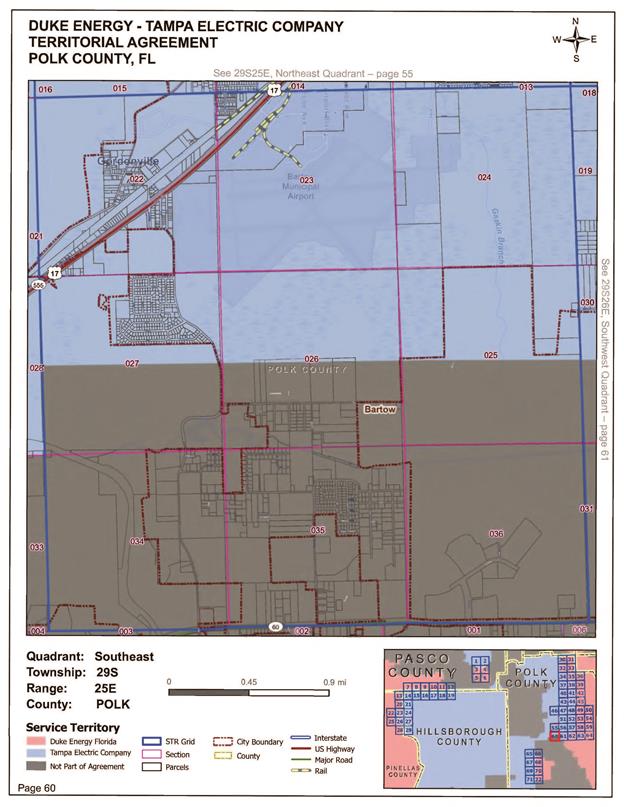
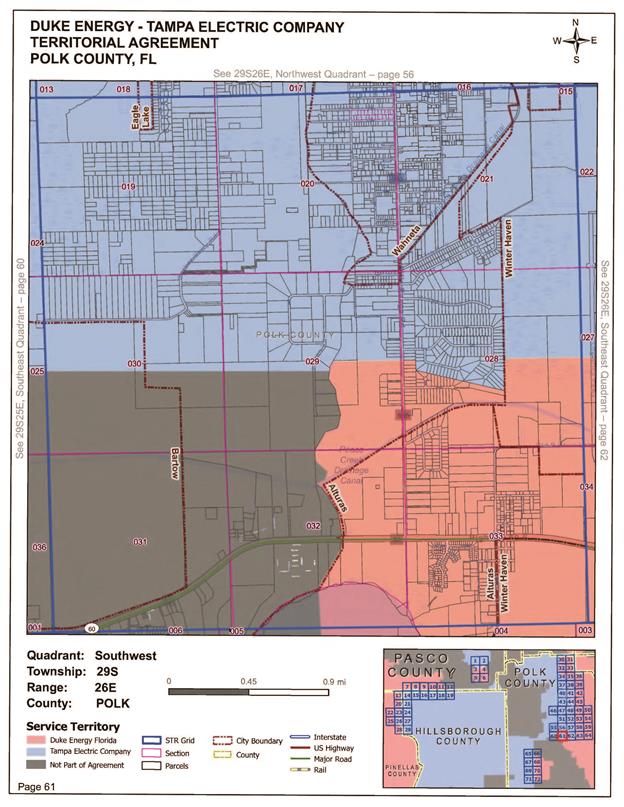
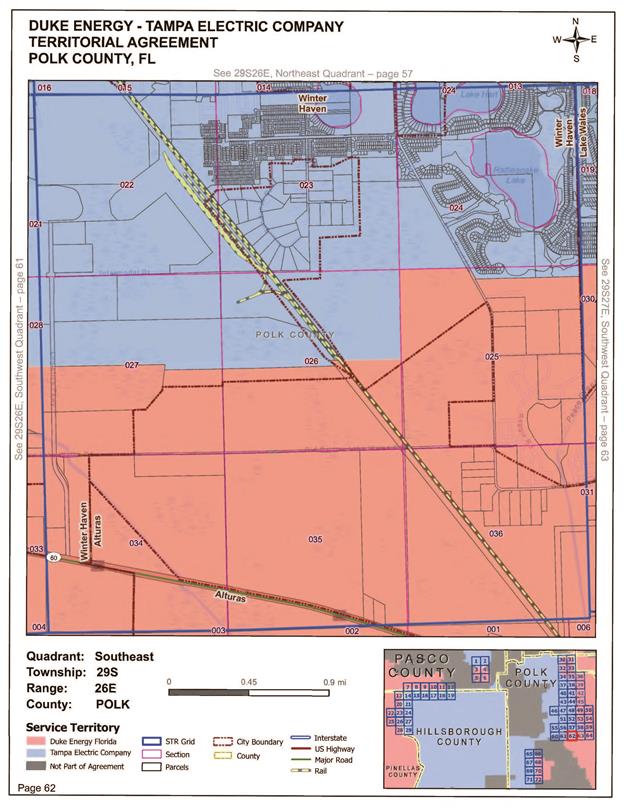
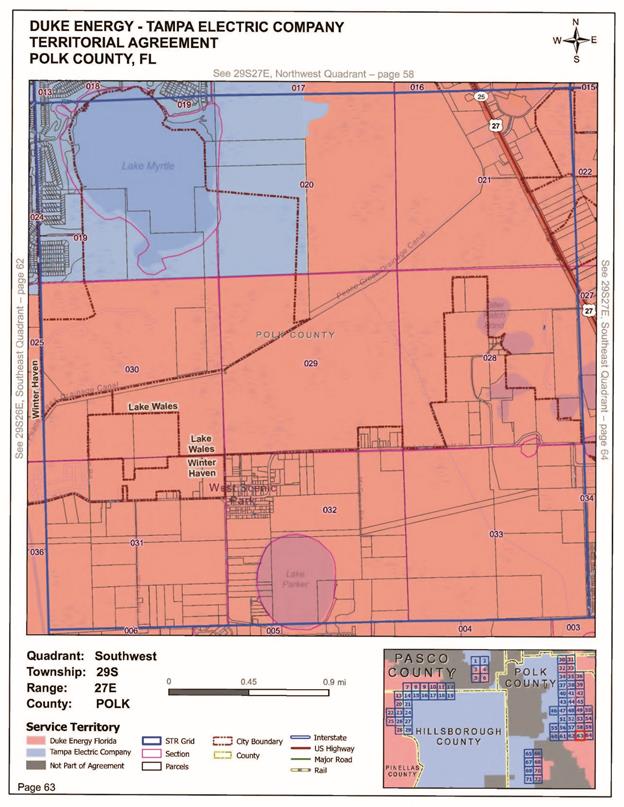
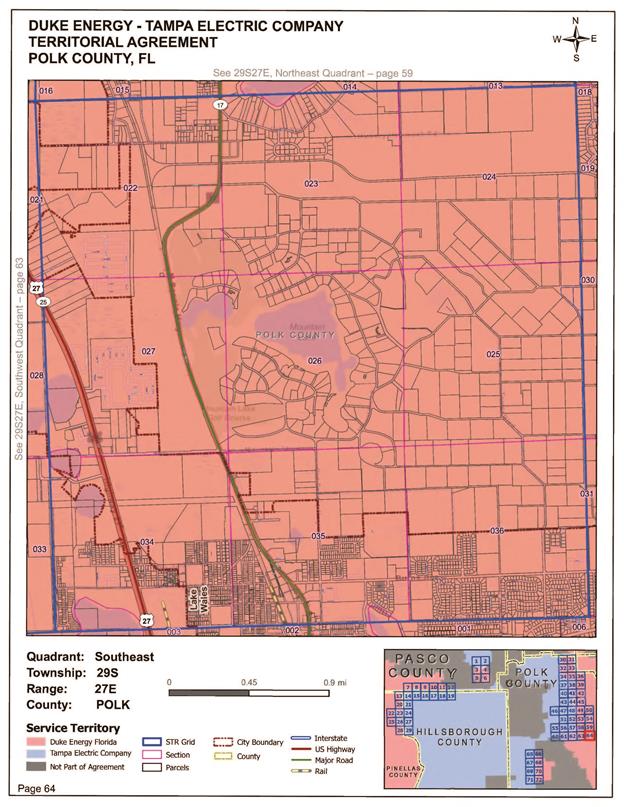
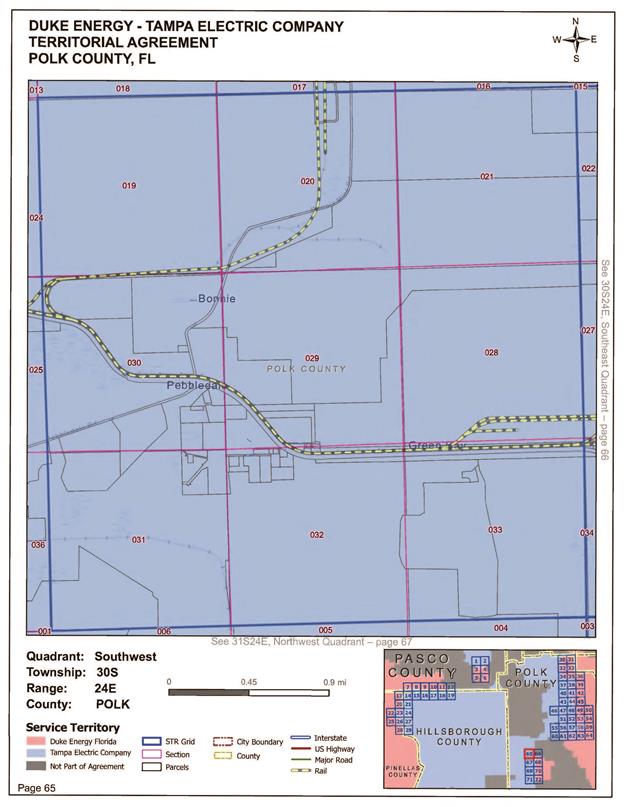
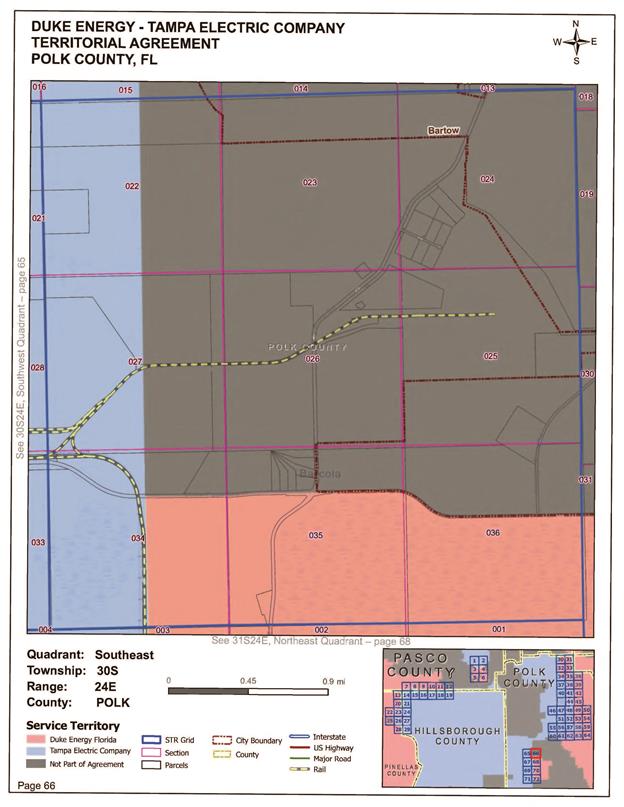
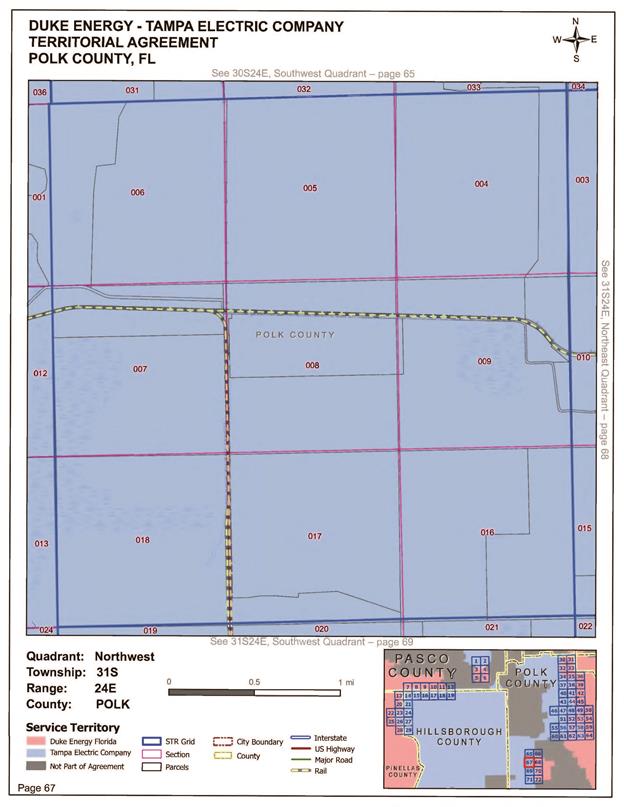
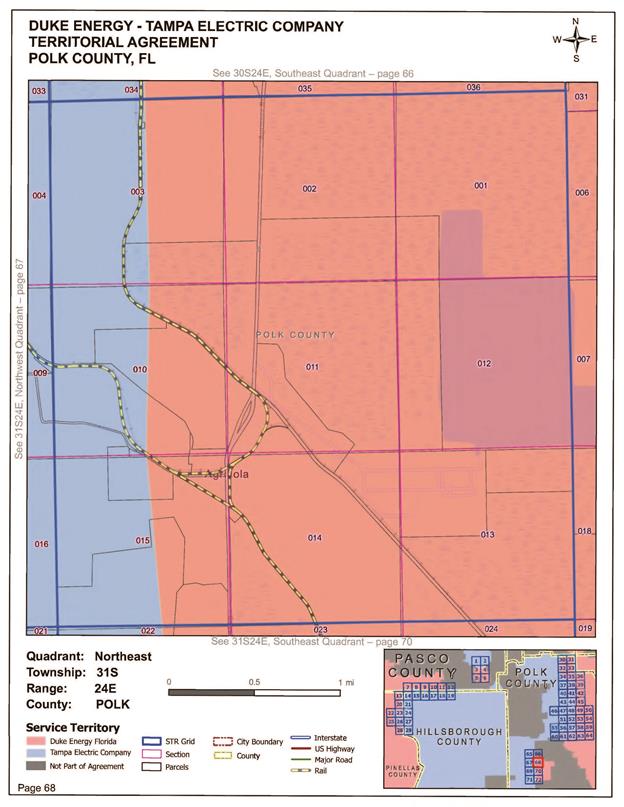
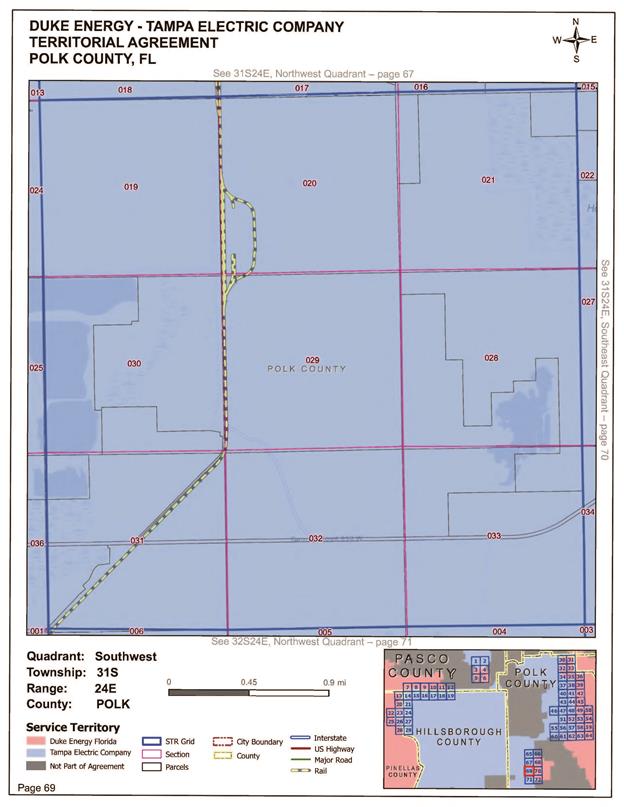
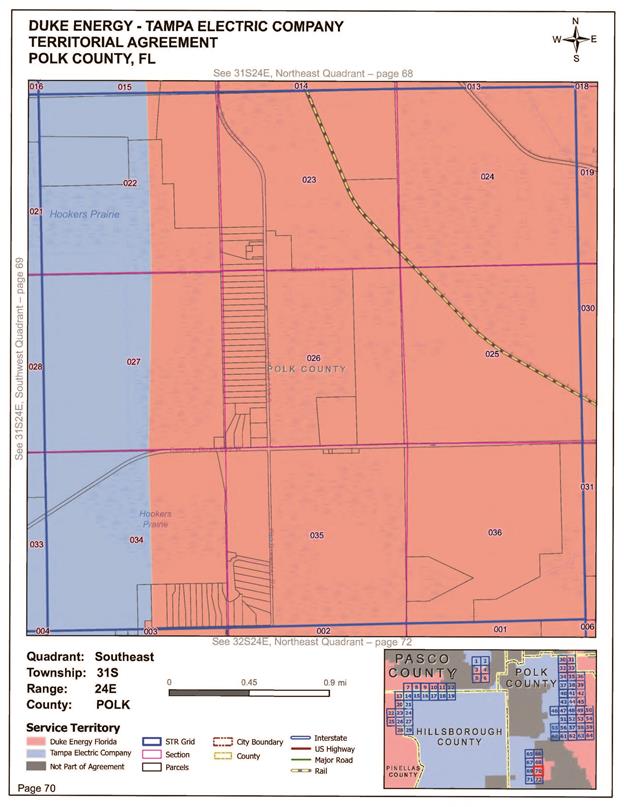
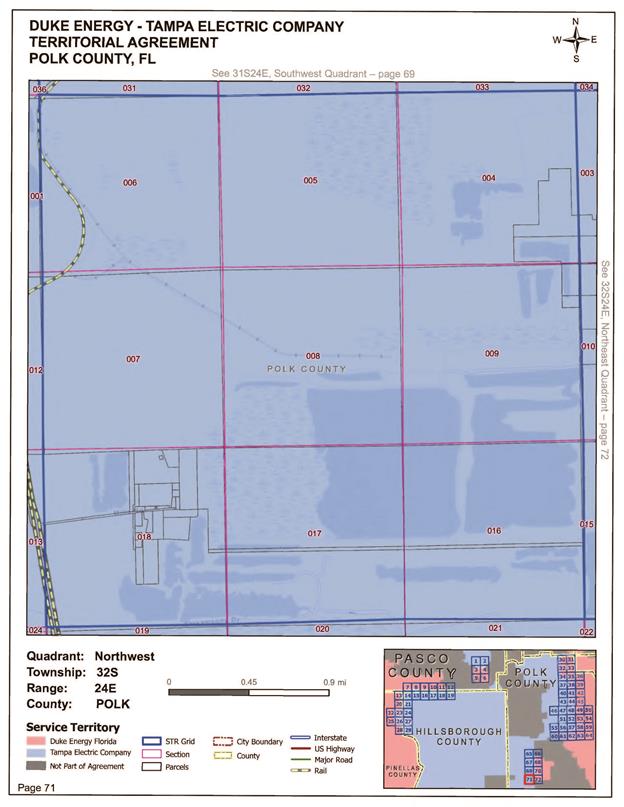
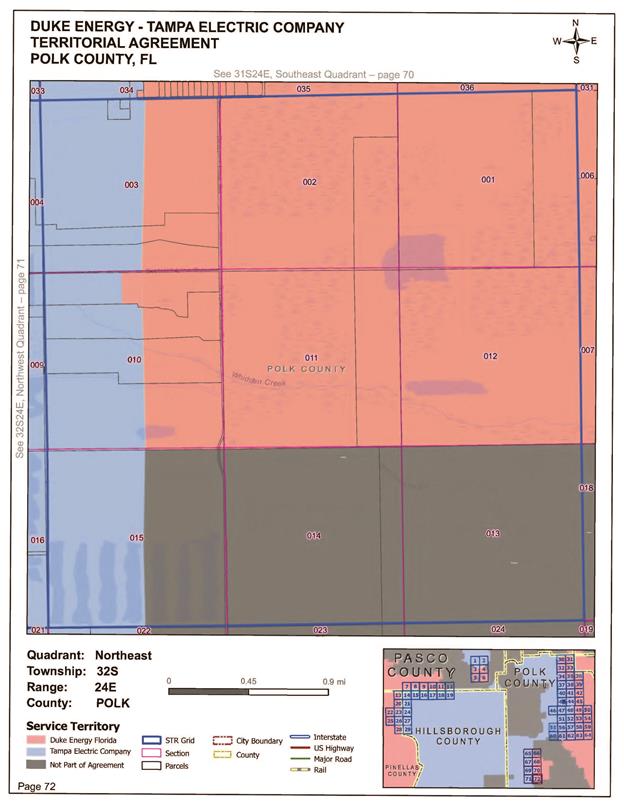
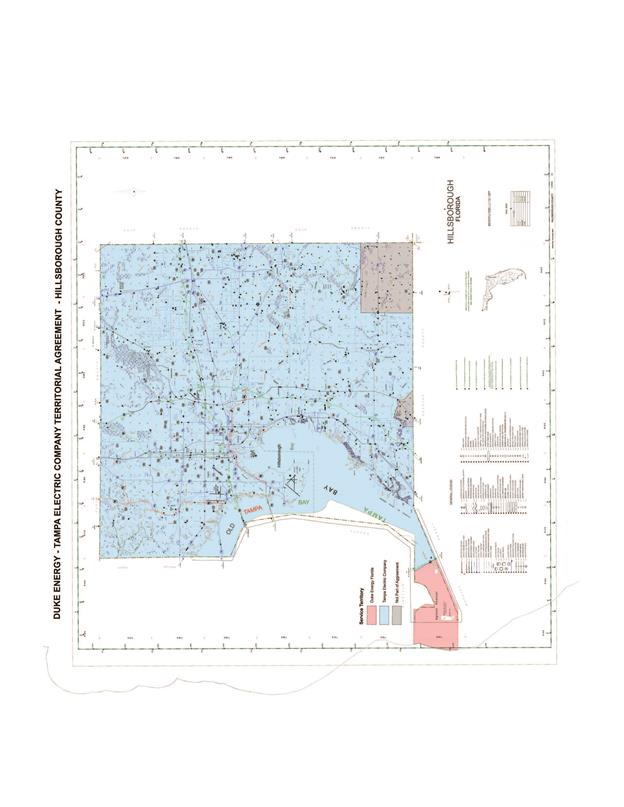
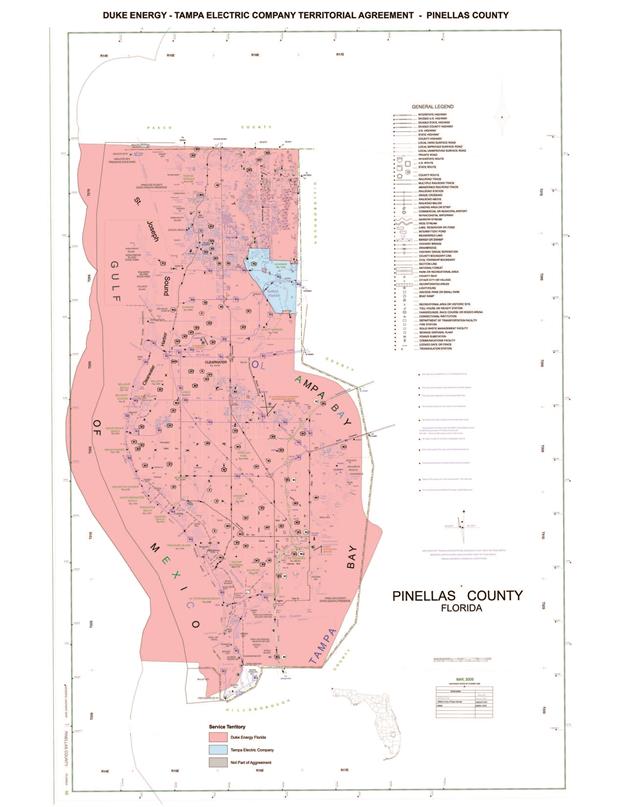
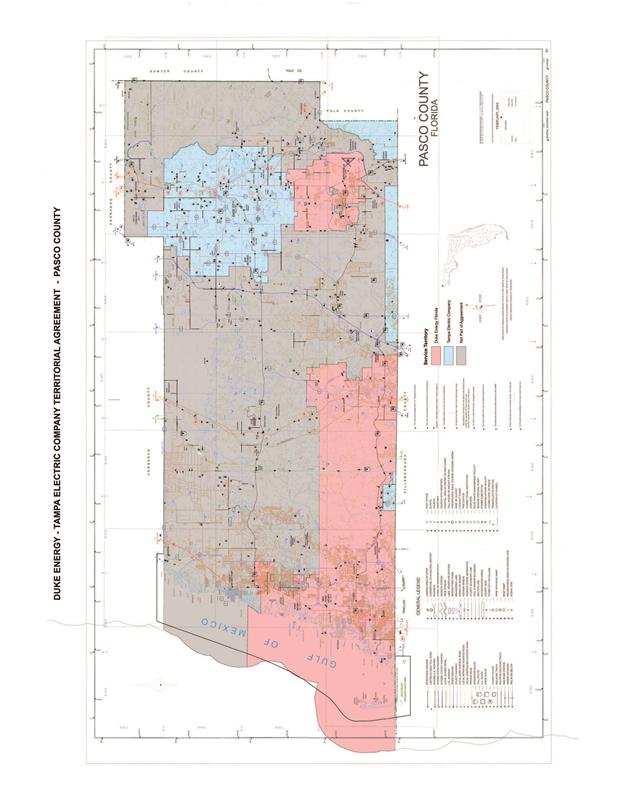
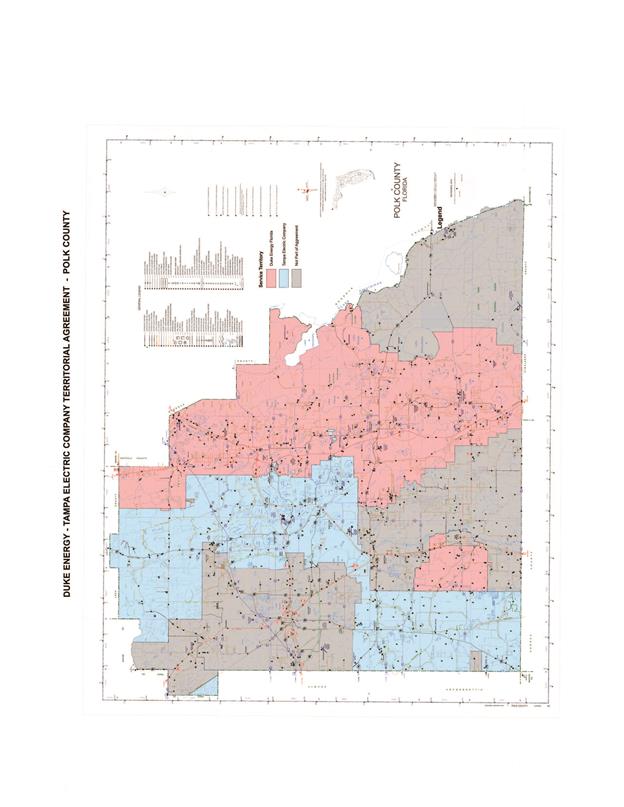
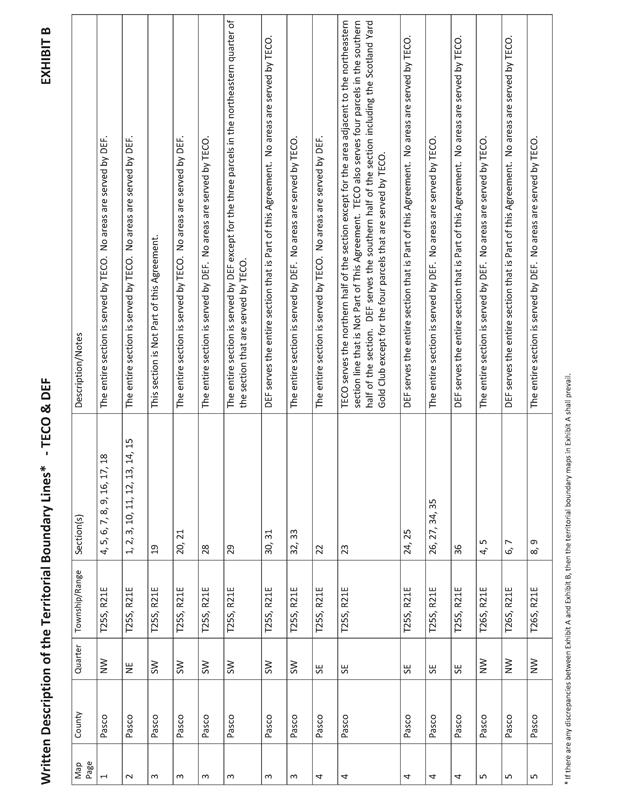
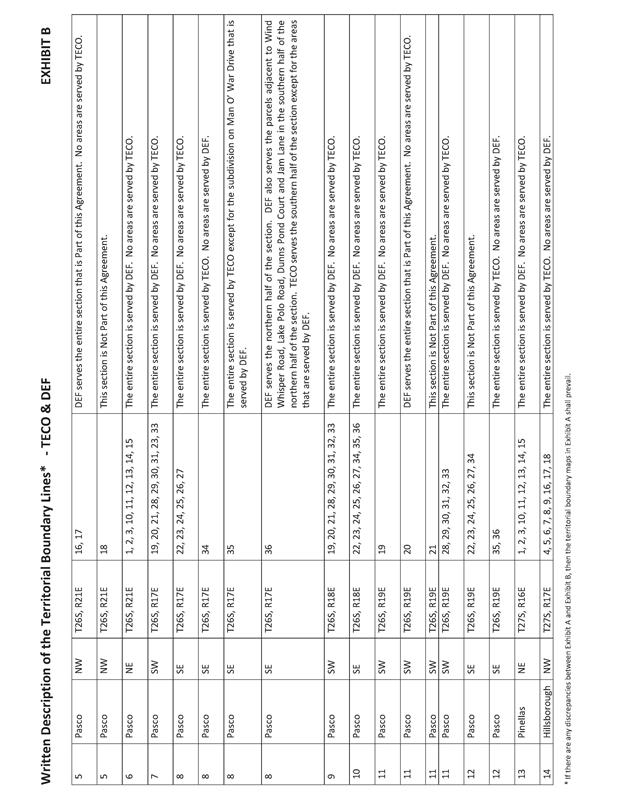
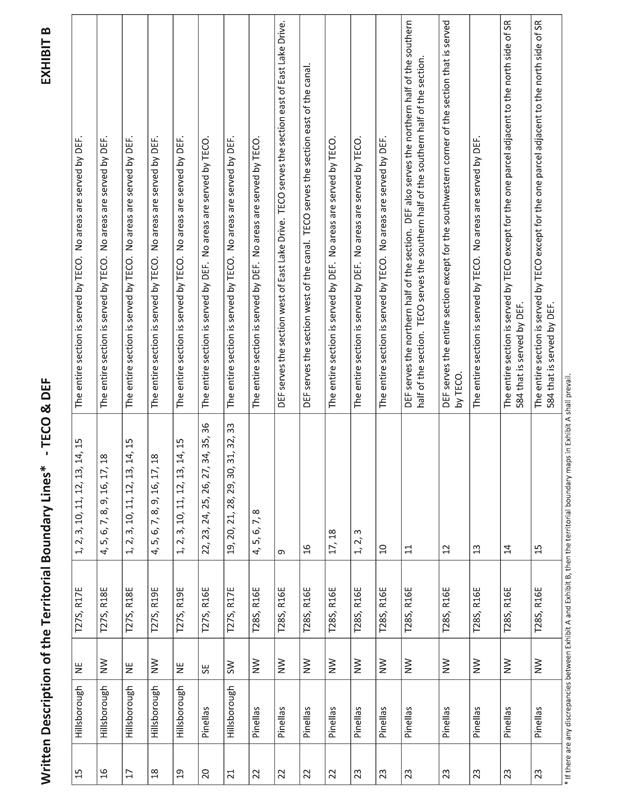
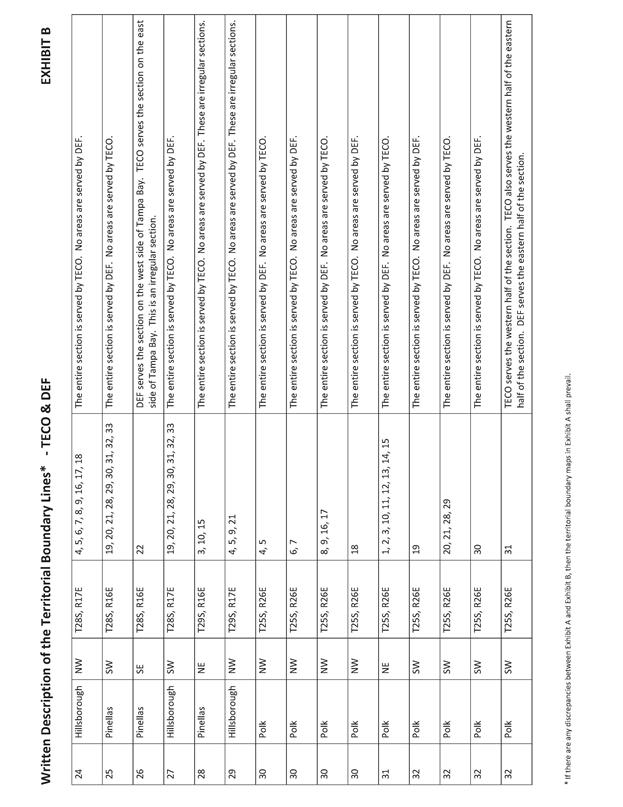
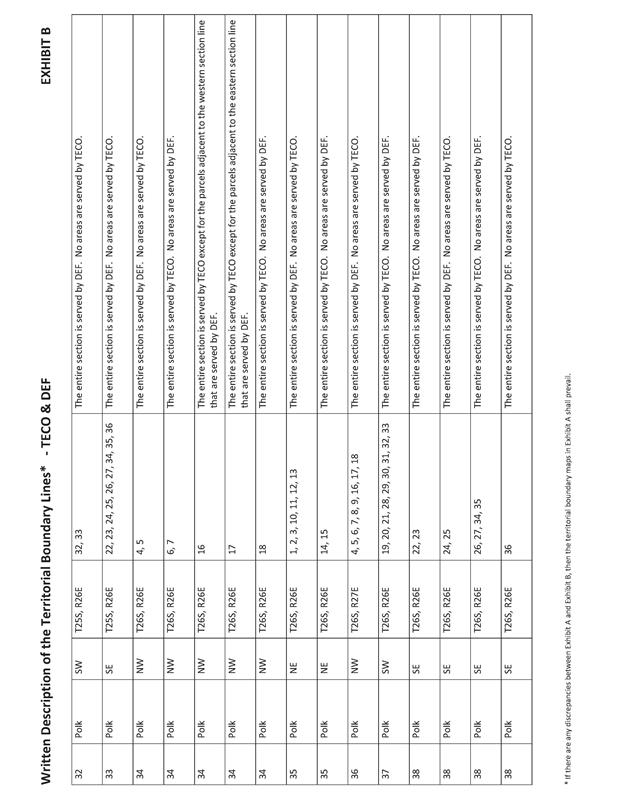
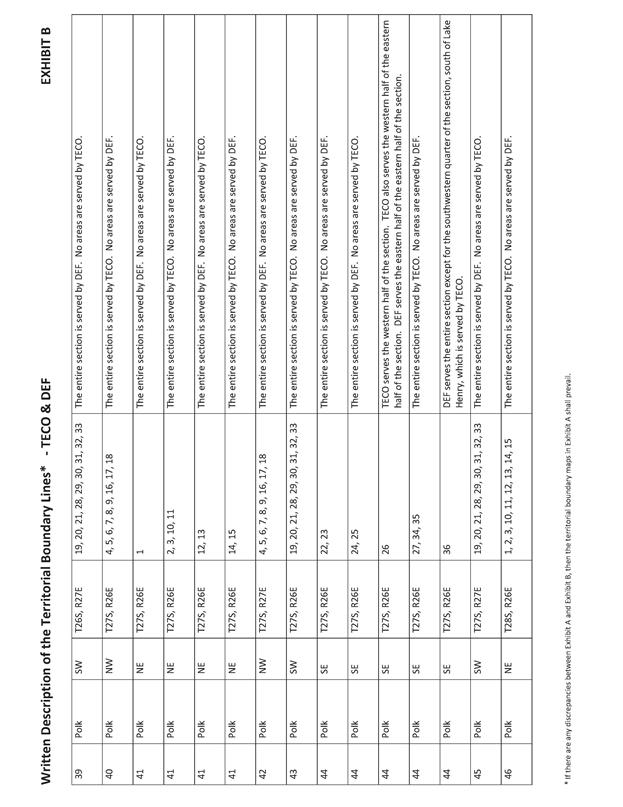
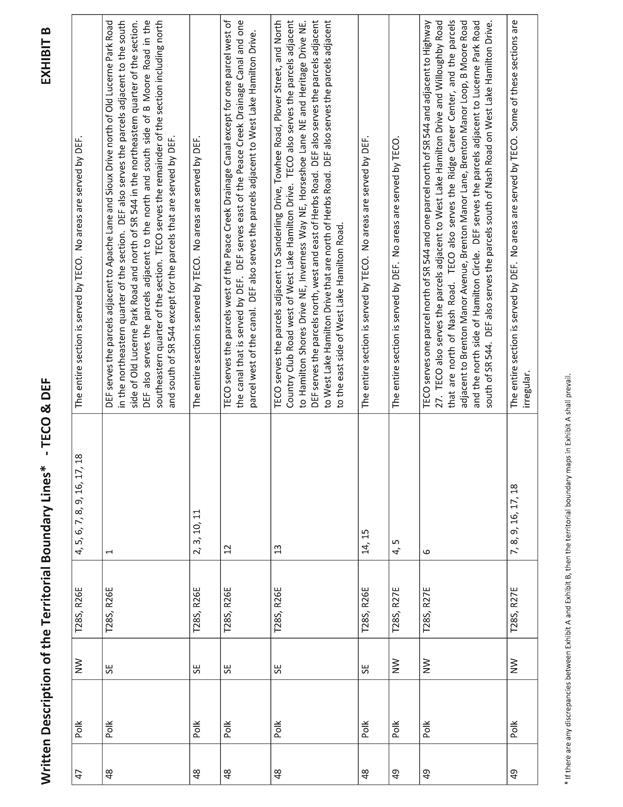
The 2026 Territorial Agreement includes 72 maps depicting
the new territorial boundaries, written descriptions of the territorial areas,
and comprehensive terms and conditions the joint petitioners negotiated. Among
the terms the joint petitioners agreed on were terms addressing the provision
of new and temporary service, methods and obligations each utility will follow
for correcting inadvertent service errors, and procedures for the transfer of
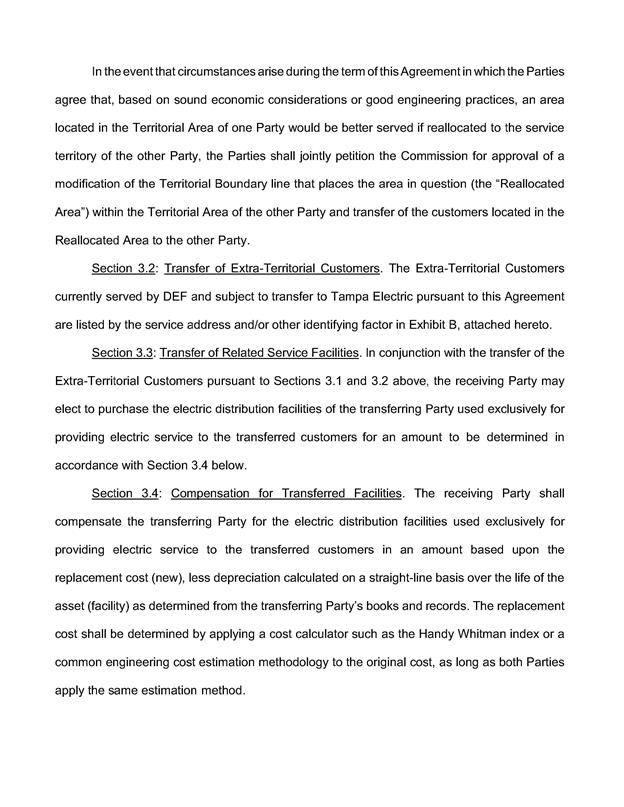
customers and facilities. The 2026 Territorial Agreement also includes the
joint petitioners’ negotiated terms regarding the method of compensation for
transferred facilities, and identifies the service addresses for the
extra-territorial customers that are to be transferred. The joint petitioners’
filing also includes a sample copy of the notification letters provided to
customers that are subject to transfer.
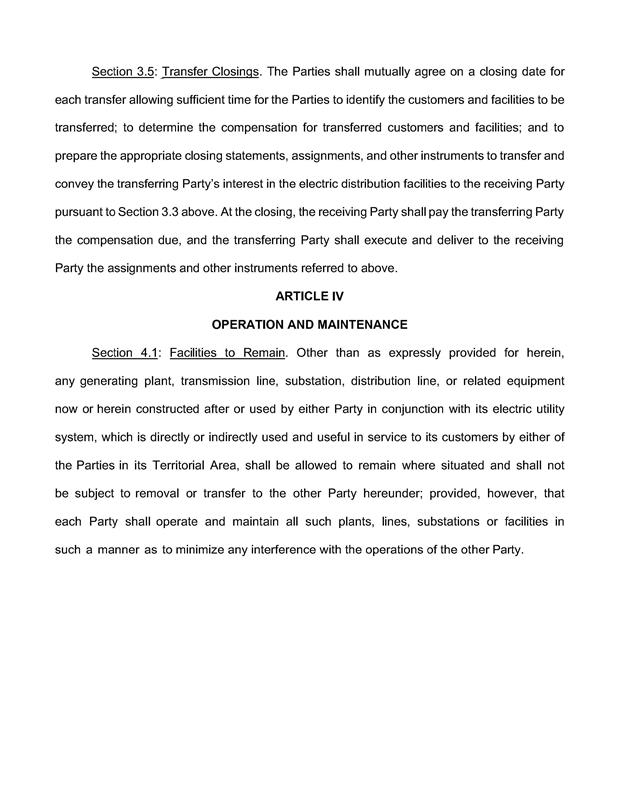
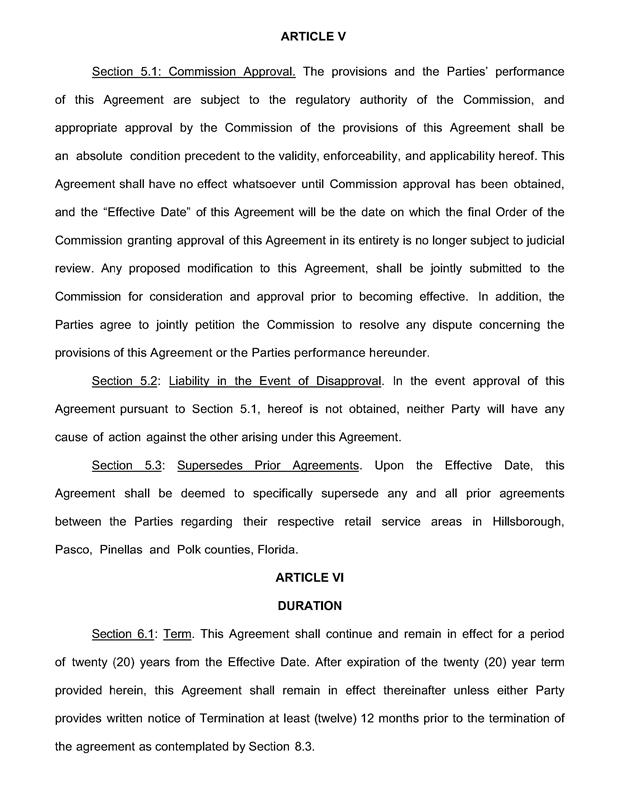
Pursuant to Section 6.1, the 2026
Territorial Agreement, if approved, would remain in effect for 20 years from
the date the Commission issues its order approving the agreement in its
entirety and the order is no longer subject to judicial review. Upon the
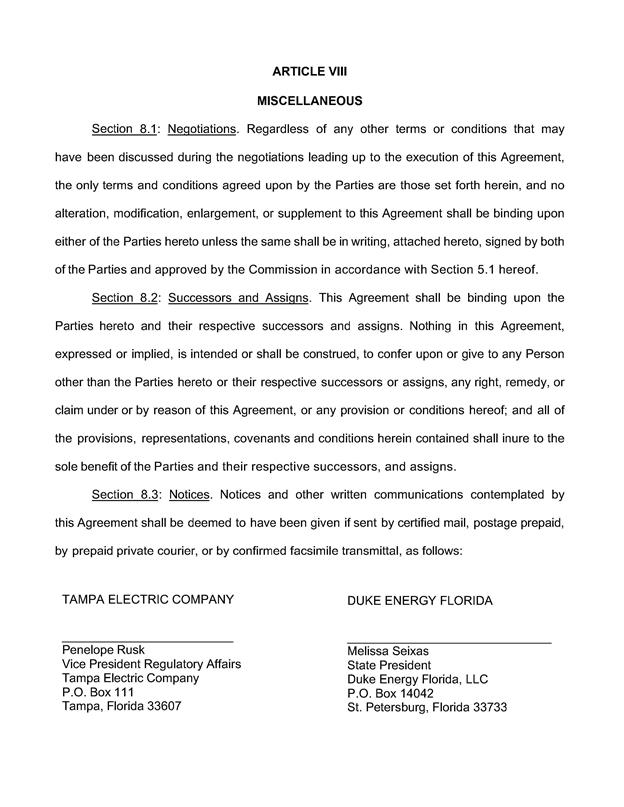
expiration of the initial 20-year term, the agreement would remain in effect in
perpetuity unless either party provides written notice of termination at least
12 months prior to the termination of the agreement in accordance with Section
8.3.
Proposed Boundary
Changes
The joint petitioners negotiated and are proposing
boundary line changes, in part, as a corrective measure to address inadvertent
service connections each party identified in their respective territories.
While collaborating over the last several years, the joint petitioners
discovered some of the inadvertent connections while analyzing the territorial
service boundaries related to the instant pleading.
Some proposed boundary line changes address approximately
340 extra-territorial customer connections (80 extra-territorial DEF customers
in TECO’s territory and 259 extra-territorial TECO customers in DEF’s
territory) that are not subject to transfer due to specific technical reasons
or the uneconomic cost of switching utility facilities. Instead, the Utilities have agreed to modify
their service territory boundaries to eliminate these extra-territorial connections.
The joint petitioners assert that the proposed boundary
line changes are primarily needed to
avoid duplication of services and wasteful expenditures, as well as to
best protect the public health and safety from hazardous conditions.
While negotiating the 2026 Territorial Agreement, both DEF
and TECO exchanged geographic information systems (GIS) files to update their
respective mapping resources. Should the agreement be approved, the joint
petitioners claim having agreed-upon maps will allow for better planning of
distribution and transmission capital investments.
The joint petitioners assert that corrective measures and
improved processes should significantly reduce inadvertent service connections
going forward. Both Utilities state that modern digital mapping more clearly
defines service territories, and that shared advanced GIS platforms provide
greater precision for identifying boundaries and agreeing on proposed borders.
Both Utilities report expanded GIS team staffing. In addition, both Utilities
perform verification reviews of boundary
lines in the field upon service initiation, and DEF now also conducts off-cycle
verification reviews roughly every five years.
Despite these improvements, the joint petitioners acknowledge connection
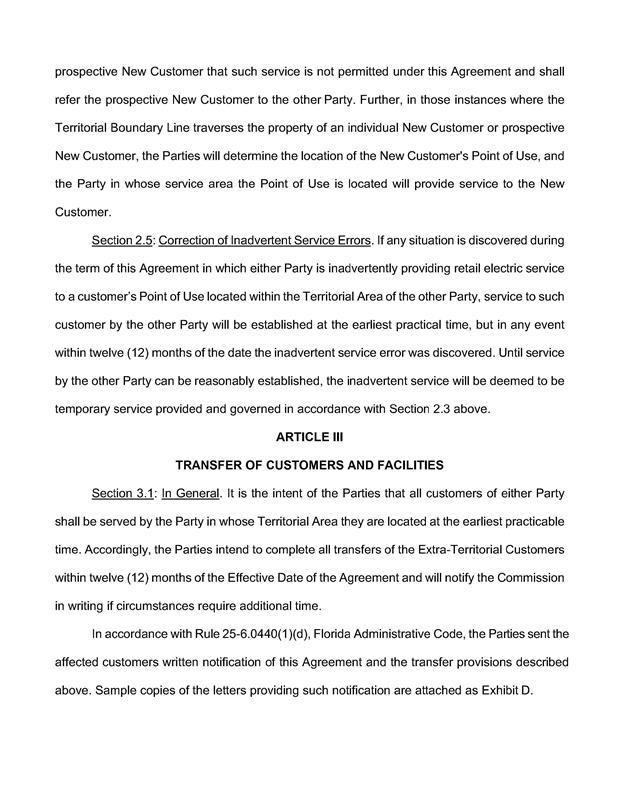
errors may still occur. Section 2.5 of the proposed 2026 Territorial Agreement
requires correction within 12 months of discovery.
In the interim, affected customers are treated as temporary service
customers, and if temporary service is expected to exceed one year, the parties
must jointly seek Commission approval.
Proposed Customer
Transfers, Notifications, and Bills
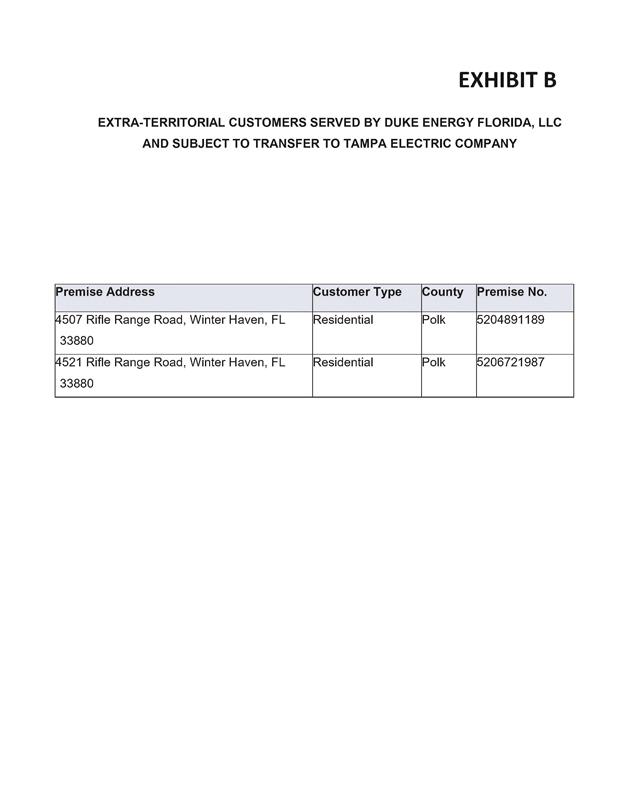
Exhibit B of the 2026 Territorial Agreement identifies the
service addresses of the two active DEF customer accounts that are proposed to
be transferred to TECO.
Both customers are neighboring parcels in a residential subdivision. The
proposed customer transfers under the 2026 Territorial Agreement are a result
of negotiations between the Utilities, with the intent of avoiding duplication
of services and wasteful expenditures, as well as to best protect the public
health and safety from potentially hazardous conditions.
The Utilities have no plans to transfer facilities. The
joint petitioners state that, upon Commission approval of the 2026 Territorial
Agreement, customer transfers will be coordinated over a 12-month period.
The joint petitioners state that they will not conduct any customer transfers
until the Commission approves the joint petition.
Rule 25-6.0440(2)(d), F.A.C., also gives the Commission
the discretion to address any other relevant concerns that are case-specific. Based
on the comparative bill information provided to customers by letter in November
2025, the average residential DEF bill for 1,000 kWh was $179.29 and the
average residential TECO bill for 1,000 kWh was $168.01, a difference of
$11.28, or about 6 percent.
The joint petitioners assert they followed the guidelines
of Rule 25-6.0440(1)(d), F.A.C., which required them to provide notification
to the affected customers. This notification was provided in letters dated
November 10, 2025.
Regarding feedback from those letters, the joint petitioners stated they have
received no customer comments expressing dissatisfaction related to the
proposed transfers. The joint petitioners also assert that prior to the actual
transfer, the affected customers will receive a second notification of the
transfer. The joint petitioners also state that no additional charges will be
imposed on the customers who will be transferred, assuming Commission approval.
Staff Review
In its review, staff analyzed the 2026 Territorial
Agreement for compliance with each component of Rule 25-6.0440(2), F.A.C. Staff
notes that no purchase price, construction cost estimates, or detailed
engineering drawings were presented to staff for review, as the
joint petitioners stated that no facilities are intended to be purchased or
transferred.
Staff also evaluated the agreement according to Rule
25-6.0440(2)(b), F.A.C., which addresses electrical system reliability for
existing or future customers. The joint petitioners contend that the
reliability of service to existing or future DEF or TECO customers would not be
decreased as a result of the proposed agreement.
Additionally, both Utilities confirmed that the 2026 Territorial Agreement
would help them gain further operational efficiencies and customer service
improvements in their respective retail service areas.
Under the 2026
Territorial Agreement, the joint petitioners have proposed to minimize existing
or potential uneconomic duplication of facilities, as referenced in Rule
25-6.0440(2)(c), F.A.C., and have provided
a brief justification to support each boundary line change.
The Utilities have also provided brief justifications to support aligning the
boundary lines to eliminate all known extra-territorial customers instead of
transferring them.
In accordance with Rule 25-6.0440(2)(c), F.A.C., staff believes the minimizing
of potential uneconomic duplication of facilities represents a strong argument
favoring approval of the 2026 Territorial Agreement.
Staff is concerned with the extent of extra-territorial
customer connections reported by the Utilities (80 extra-territorial DEF
customers in TECO’s territory and 259 extra-territorial TECO customers in DEF’s
territory), with some extra-territorial customers being located a significant
distance from the boundary line.
For example, the entirety of a Polk County walled subdivision served by TECO is
located inside DEF’s service area at a distance of approximately 0.4 miles from
the nearest DEF/TECO territorial border. The 2026 Territorial Agreement,
however, addresses these concerns by setting forth the specific obligations
both Utilities are bound to regarding service provisioning and adherence to the
Commission-established boundary lines.
While Article II of the 2026 Territorial Agreement
includes specific terms for provisioning of new and temporary services, staff
notes that Article II also addresses remedies the joint petitioners should
follow for correcting temporary service and inadvertent service connections.
Specifically, temporary service expected to last more than one year, including
inadvertent service connections, must be jointly submitted to the Commission
for approval by the Utilities (Sections 2.3 and 2.5). Staff believes the joint
parties, aided with their respective boundary verification protocols for
establishing/auditing service connections, should follow such protocols in
order to assure compliance with this stated term of the 2026 Territorial
Agreement. Doing so will assure that the Utilities are abiding by the
Commission-established boundary lines to the greatest extent possible, and
should also serve to limit the Utilities’ need to seek Commission approval for
inadvertent connections beyond a year.
Staff believes DEF and TECO satisfied the notification
requirements of Rule 25-6.0440(1)(d), F.A.C., for customers affected by the
proposed service and rate changes. At the time the November 10, 2025
notification letters were issued, the projected bill decrease for DEF customers
to be transferred to TECO did not appear significant. However, Staff recognizes
that future rate differences cannot be known with certainty and that actual
rates at the time of transfer may differ from those presented in the
notification letters.
Conclusion
Staff believes the Commission should approve the 2026
Territorial Agreement between DEF and TECO in Hillsborough, Pasco, Pinellas,
and Polk Counties, as consistent with the Standards for Approval set forth in
Rule 25-6.0440(2), F.A.C. The 2026 Territorial Agreement, if approved, amends
the respective boundary lines between the Utilities and authorizes customer
transfers for two residential customers. Additionally, the terms of the
agreement, if approved, would allow the joint petitioners to avoid uneconomic
duplication of service facilities, wasteful expenditures, and hazardous
conditions. Also, the terms of the agreement require the Utilities to seek
Commission approval of any temporary service, including inadvertent service,
expected to last more than one year. Staff believes the need for the Utilities
to seek such approval should be limited as a result of recently deployed
boundary line verification protocols for new service connections, increased
boundary monitoring personnel, and improved mapping tools and technologies. The
Utilities are also encouraged to communicate with Commission staff in a timely
fashion when inadvertent service is discovered.
Issue 2:
Should this docket be closed?
Recommendation:
If no protest is filed
by a person whose substantial interests are affected within 21 days of the
issuance of the Order, this docket should be closed upon the issuance of a
Consummating Order. (Thompson)
Staff Analysis:
If no protest is filed by a person whose substantial
interests are affected within 21 days of the issuance of the Order, this docket
should be closed upon the issuance of a Consummating Order.